Filler rheology made simple: G prime and cohesivity
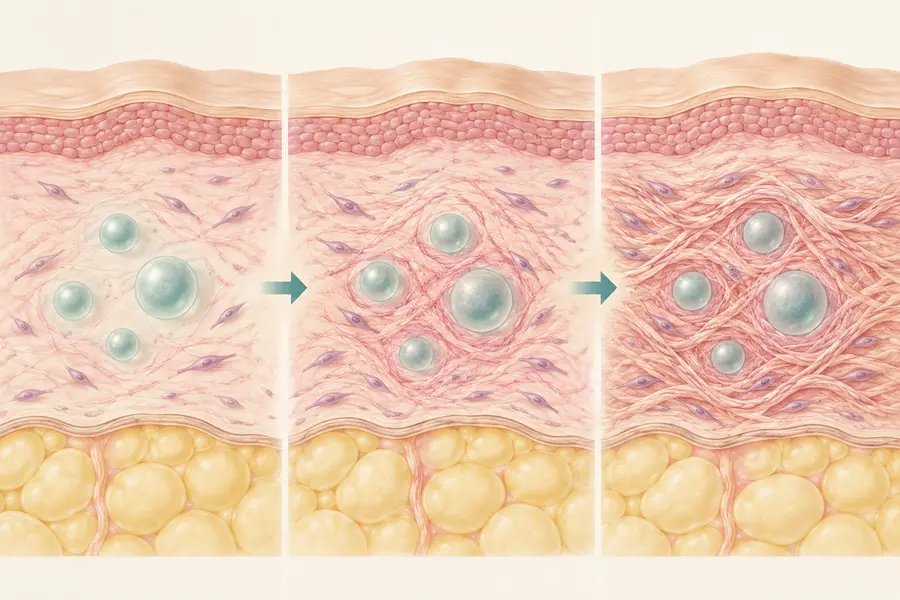
G prime, viscosity and cohesivity explained in terms of what they actually predict about how a gel behaves once it is in tissue.
Clinical background for aesthetic practice: facial injection anatomy, the behaviour of hyaluronic acid fillers, botulinum toxin handling, and the complication patterns that shape safe technique.
These pages collect the reference material that sits behind injectable practice — where the vessels run, why a filler behaves the way it does in tissue, and what the recorded complication literature says about avoiding harm. They describe published knowledge; they are not treatment protocols.
G prime, viscosity and cohesivity explained in terms of what they actually predict about how a gel behaves once it is in tissue.
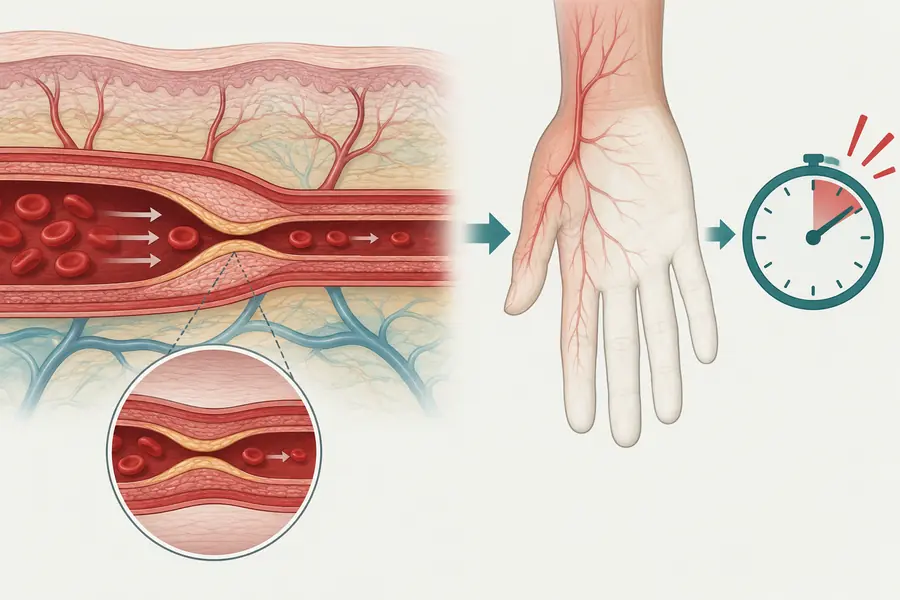
How ischaemic necrosis develops after filler injection, what the early signs look like, and why the first hour decides the outcome.
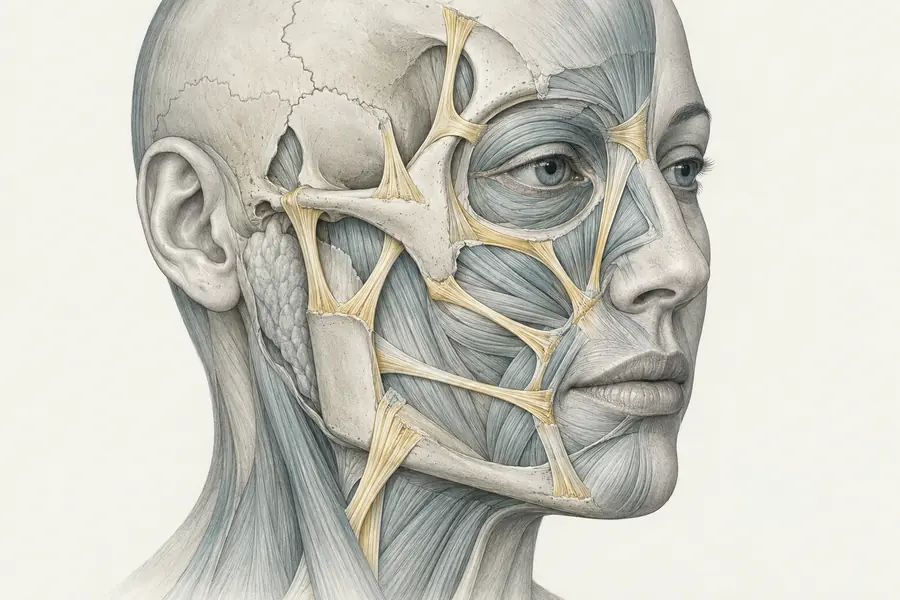
Why the ageing face folds at particular lines rather than descending evenly, and what that means for where product should go.
Why prescription-only injectables cannot be advertised to the public in the UK, what the CAP Code and Human Medicines Regulations require, and what …
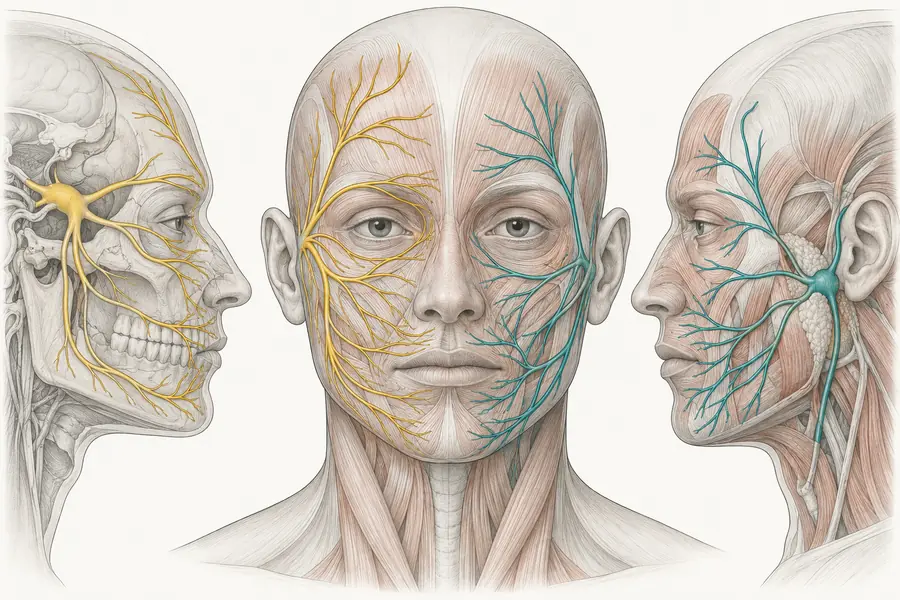
Sensation is trigeminal with a cervical contribution; movement is facial. Confusing the two is the fastest route to misreading a complication.
Ten measures that recur across the published guidance on filler safety — none sufficient alone, and effective only as a stack.
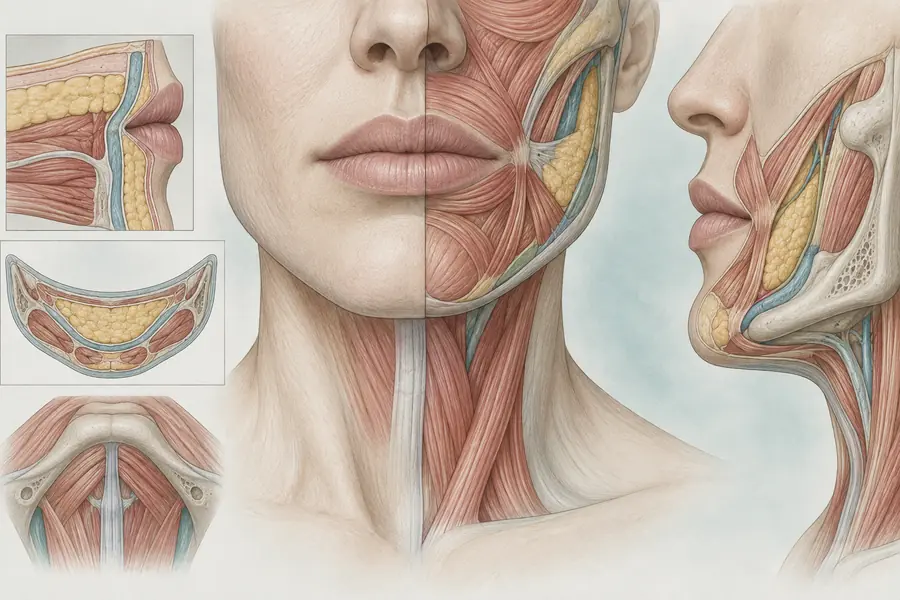
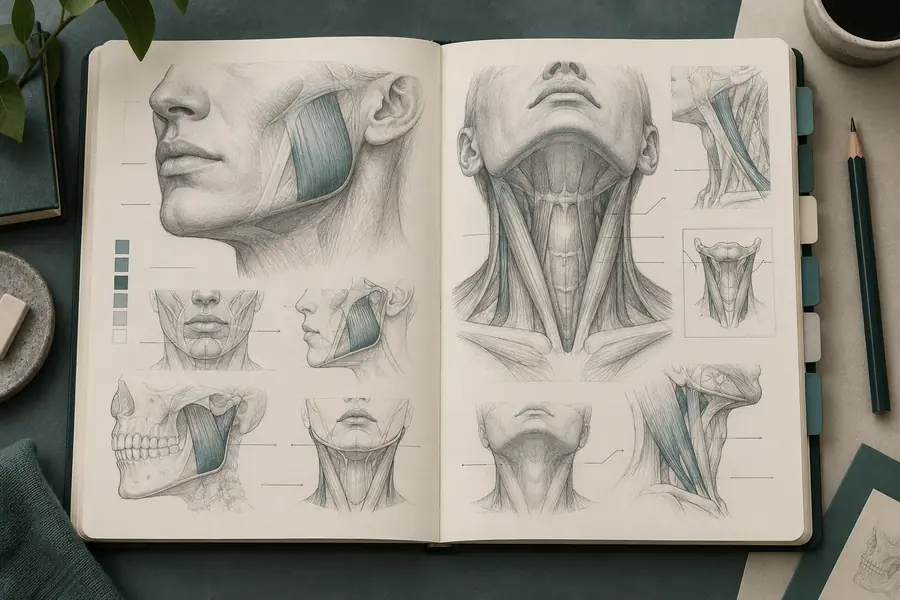
Jawline, chin and perioral region — where the arteries are close, the muscles are functional, and errors are immediately visible.
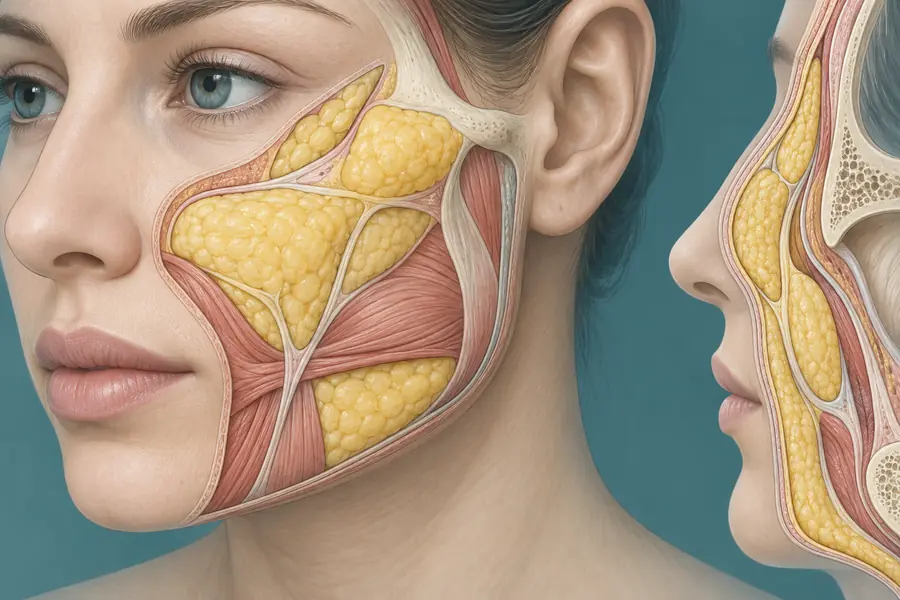
Fat compartments, retaining ligaments and the arteries that make the tear trough and nasolabial fold high-risk territory.
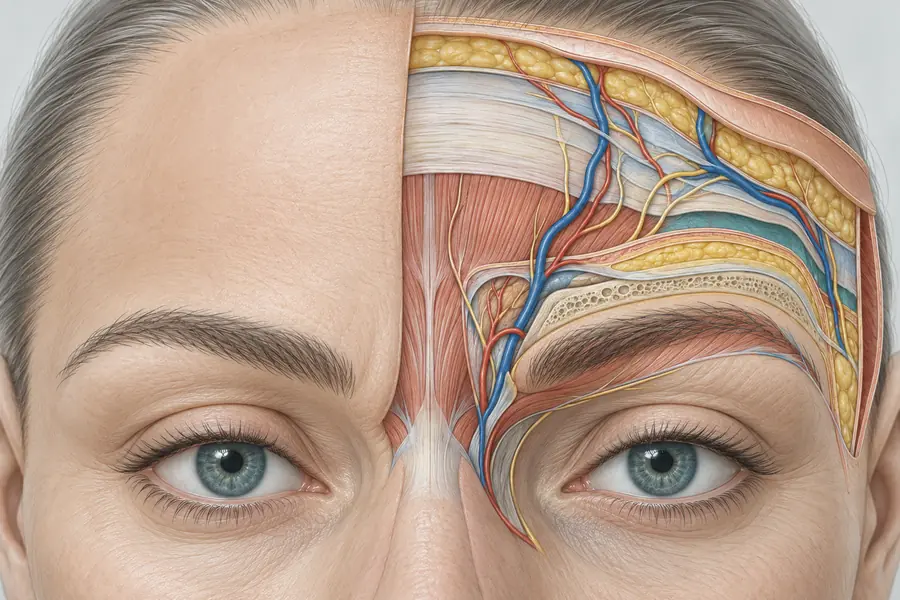
Forehead, glabella and temple: the region with the most predictable muscles and the most dangerous arteries.
The category of collagen-stimulating and nutrient-based injectables, how stimulation differs mechanically from volumising, and where the evidence is …
How an ophthalmologist's chance observation in the late 1980s turned a treatment for eyelid spasm into the most performed cosmetic procedure in the …
A study outline for advanced toxin areas, setting out the anatomical and pharmacological questions a practitioner should be able to answer before each …