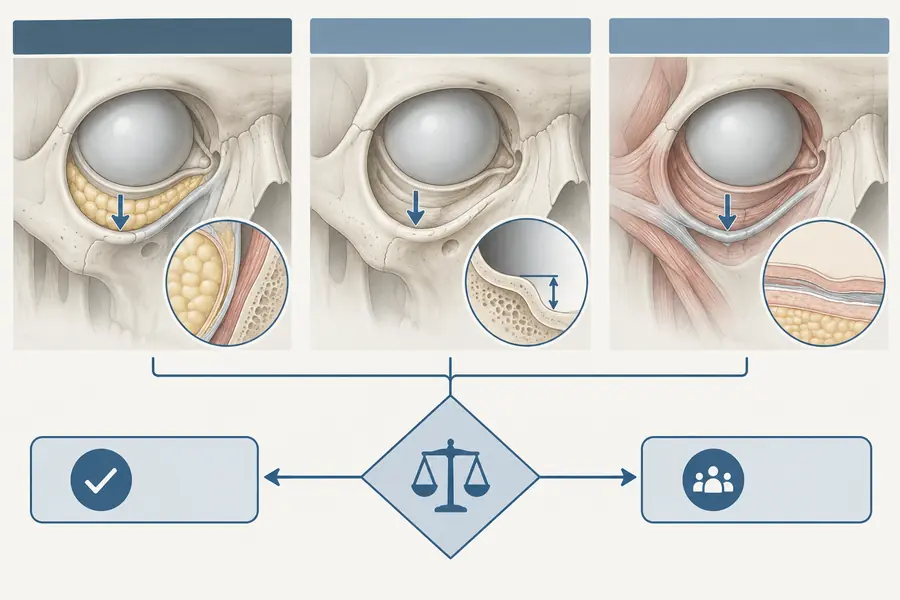
Tear trough assessment: the three causes of the hollow
The infraorbital hollow has three distinct origins that look alike at rest, and telling them apart determines whether filler is appropriate at all.
Longer reference material on aesthetic medicine: anatomy reviews, complication overviews, and reading notes on the studies that practitioners cite most often.
Extended notes and overviews. Where a resource summarises published work, the original is linked so the source can be read directly.
The infraorbital hollow has three distinct origins that look alike at rest, and telling them apart determines whether filler is appropriate at all.
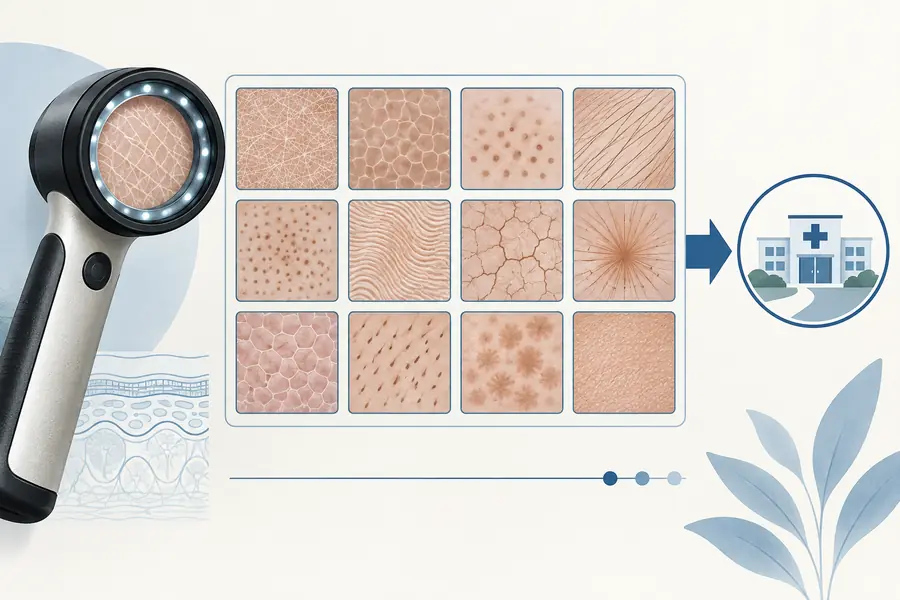
Why practitioners working on the face must be able to recognise when a lesion belongs to a referral pathway rather than to a treatment plan.
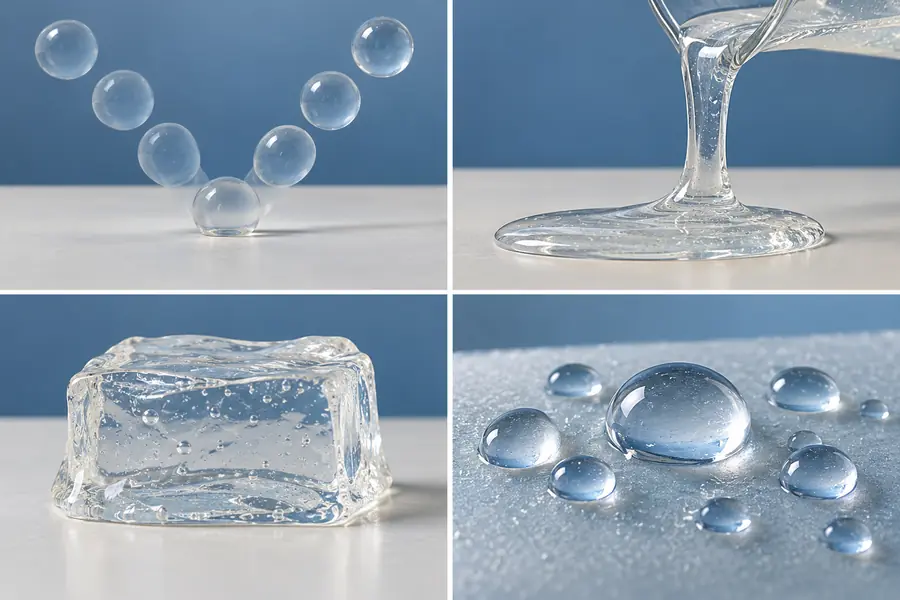
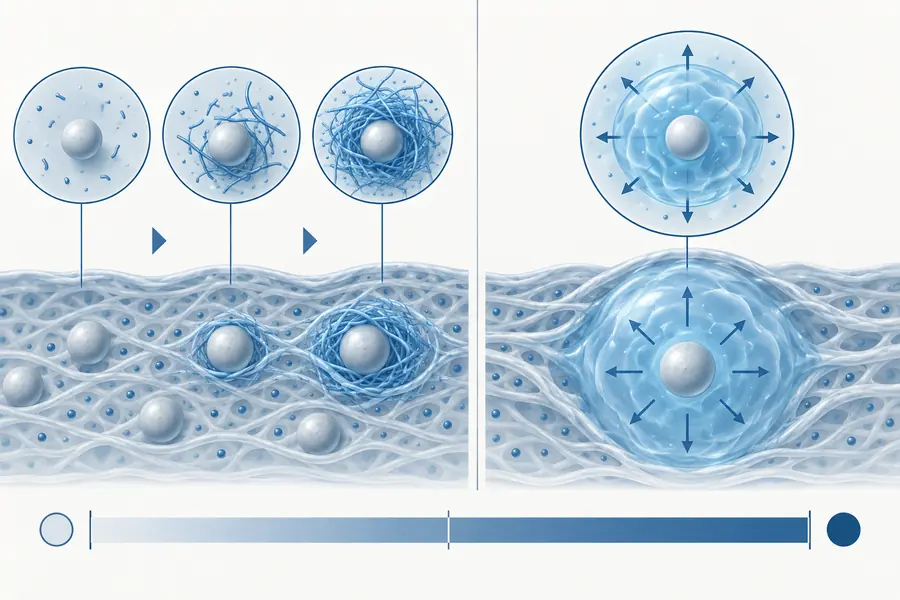
What G prime, viscosity, cohesivity and hydrophilicity are measuring, and why published figures cannot be compared directly between manufacturers.
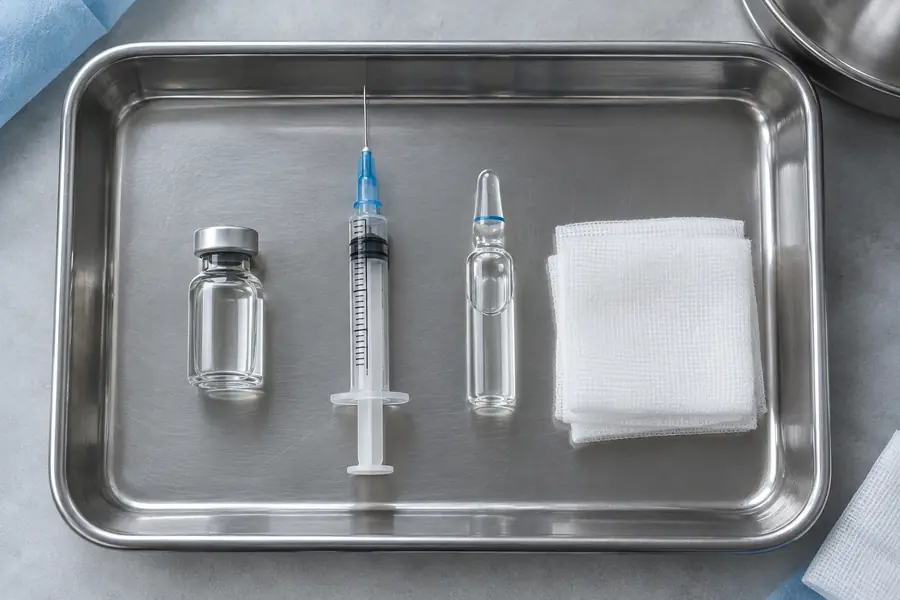
Reference notes on why published reversal protocols emphasise concentration and territory rather than volume, and why no reliable conversion to filler …
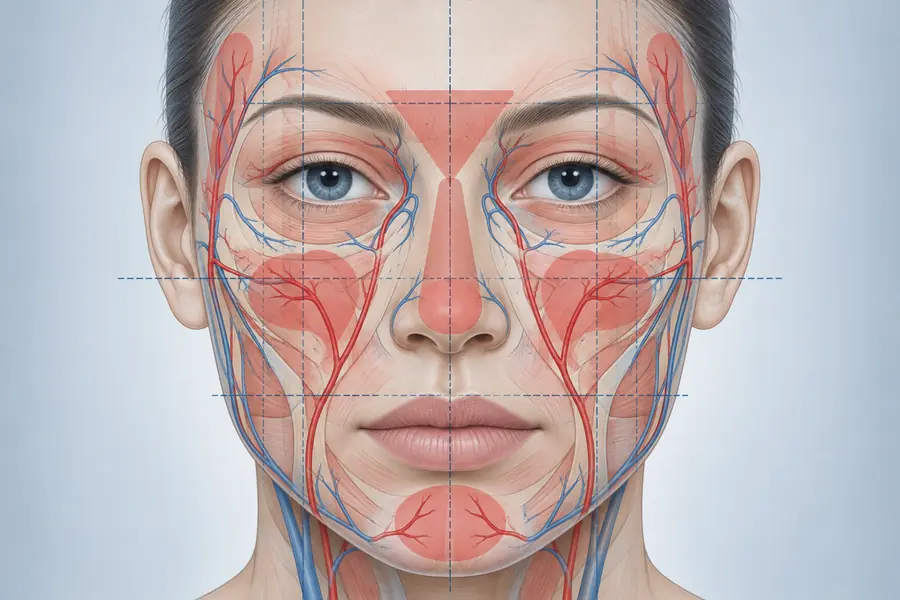
A revision note drawing the facial regions together: layers, fat compartments, retaining ligaments, the named danger zones and the carotid anastomosis …
What UK advertising law and the CAP Code permit when promoting injectable treatment, why prescription-only medicines cannot be advertised, and what …
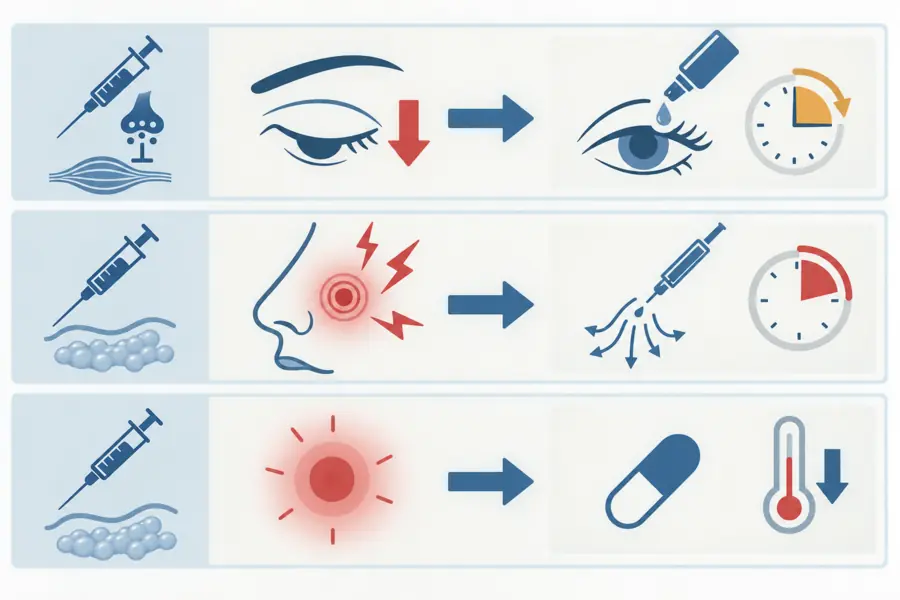
A combined overview of injectable complications organised by time of onset and by agent, with the vascular versus non-vascular split that determines …
How collagen-stimulating injectables differ from volumising fillers in mechanism, onset and endpoint, and an honest account of what the evidence …
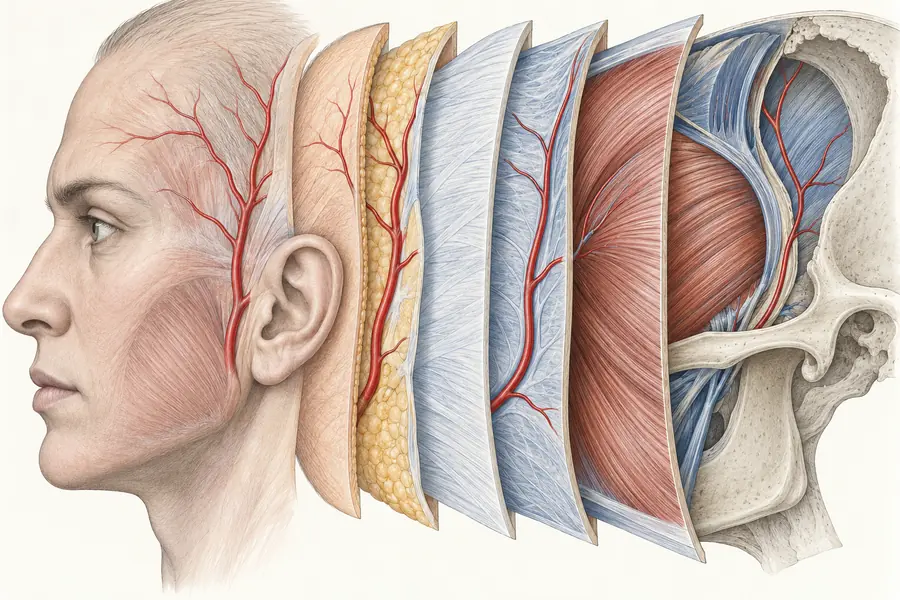
The layered anatomy of the temporal region, the vessels that make it hazardous, and why both blindness and venous embolism have been reported after …