Dilution
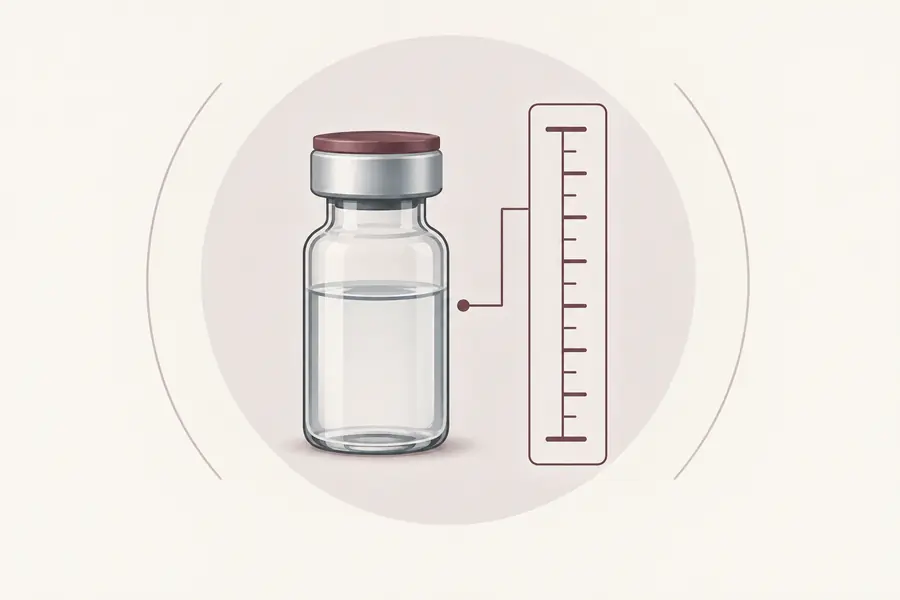
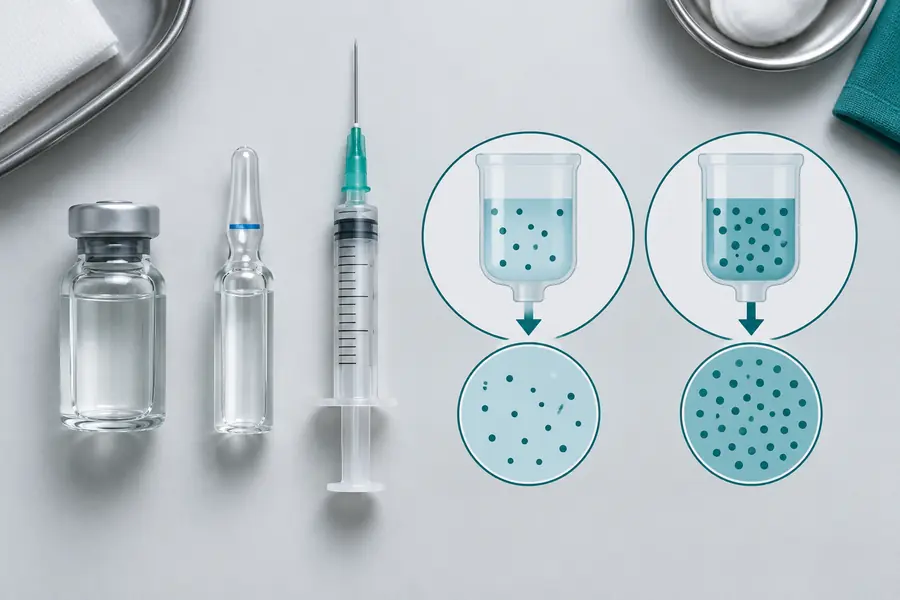
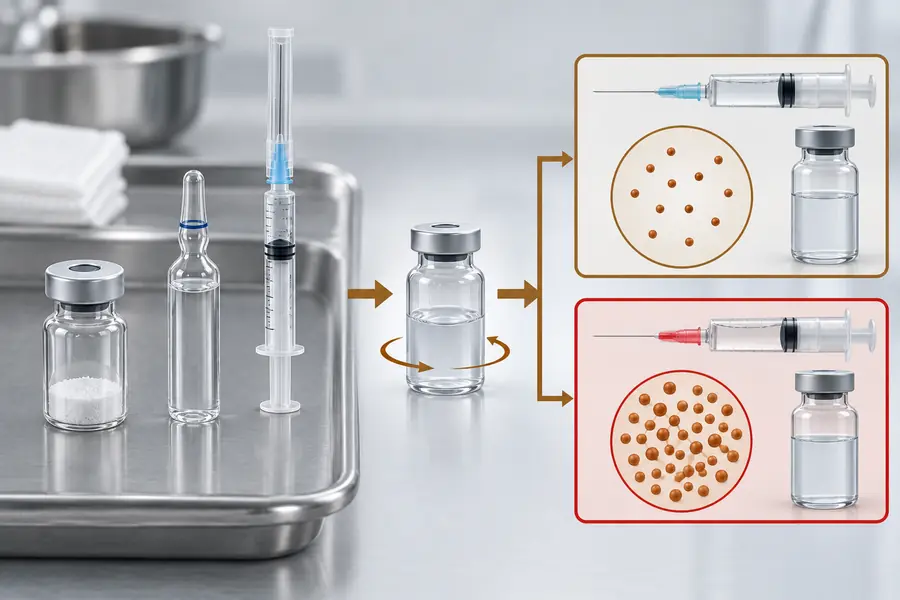
Reconstitution of a lyophilised product with a chosen volume of diluent, which sets concentration per unit volume and, with it, how far the product spreads through tissue.
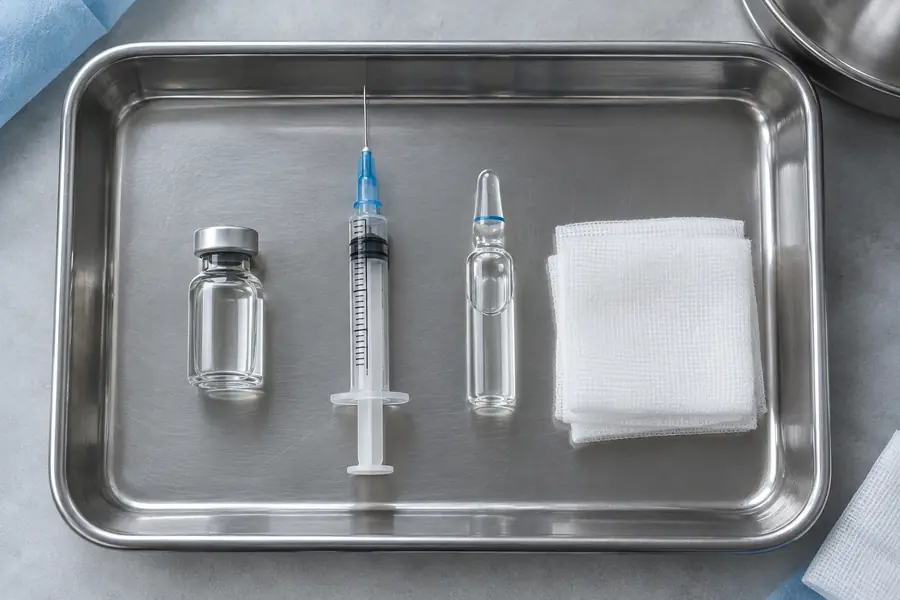
Dilution is the reconstitution step: how much diluent — normally preserved saline — is added to a lyophilised vial.
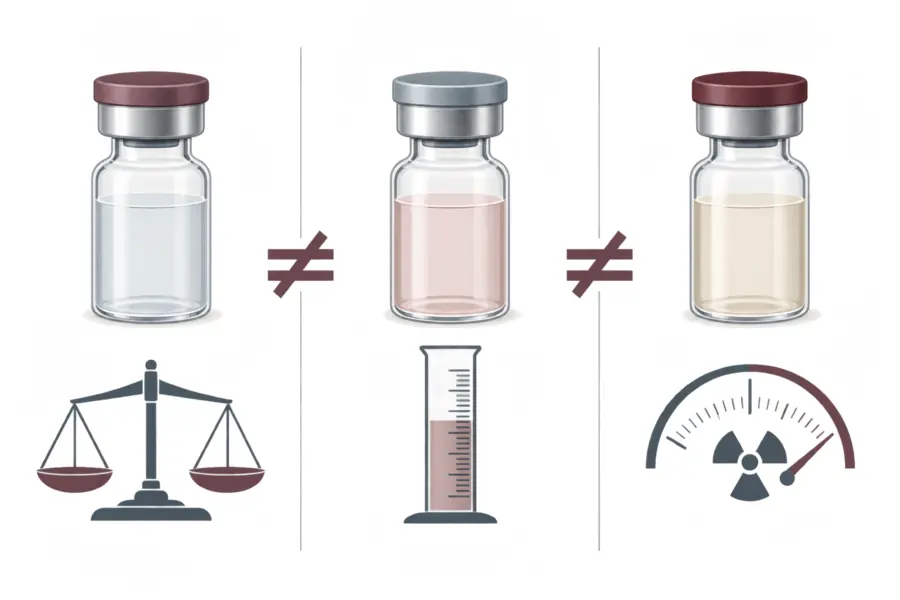
The total dose delivered depends on units, not volume, so a given number of units has the same nominal effect however it was reconstituted. What dilution changes is the volume that dose occupies, and therefore how far it diffuses from the injection point.
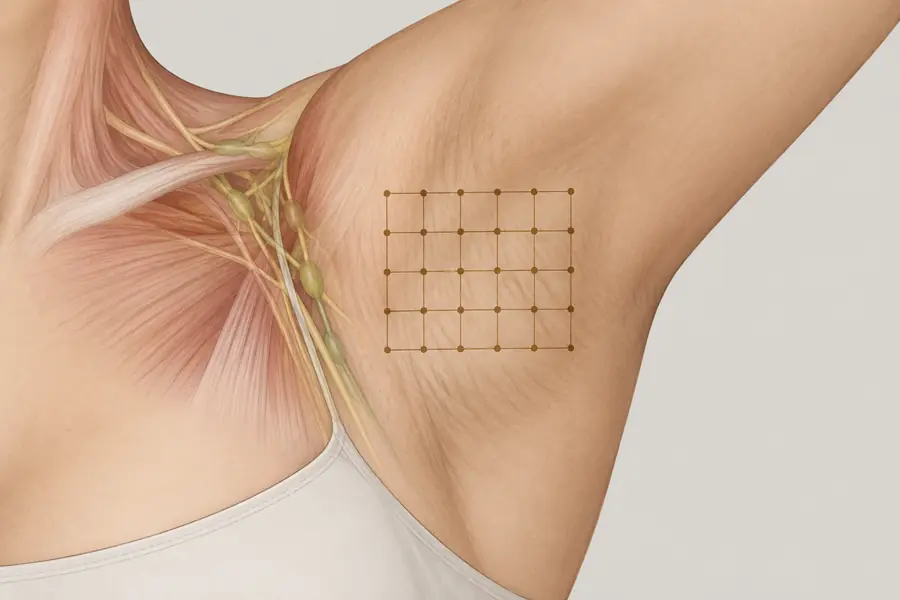
Higher dilution means larger volume per unit and wider spread. That is useful where a broad, even effect is wanted across a flat muscle, and a liability where the target sits next to a muscle that must not be weakened — the frontalis beside the levator, or the depressor anguli oris beside the depressor labii inferioris. Lower dilution concentrates the effect and reduces spread, at the cost of less even distribution across a large muscle.
The number of injection points interacts with this. Many small aliquots at low dilution give control; fewer larger aliquots at high dilution give coverage. Neither is correct in the abstract; both are decisions about how much diffusion the anatomy of that particular region can tolerate.
Preserved saline as diluent is associated with less injection discomfort than unpreserved, and reconstituted product handling follows the manufacturer’s stated storage conditions.