Facial retaining ligaments
Fibrous structures that tether facial soft tissue to underlying bone or deep fascia, defining the compartment boundaries that produce the visible folds of the ageing face.
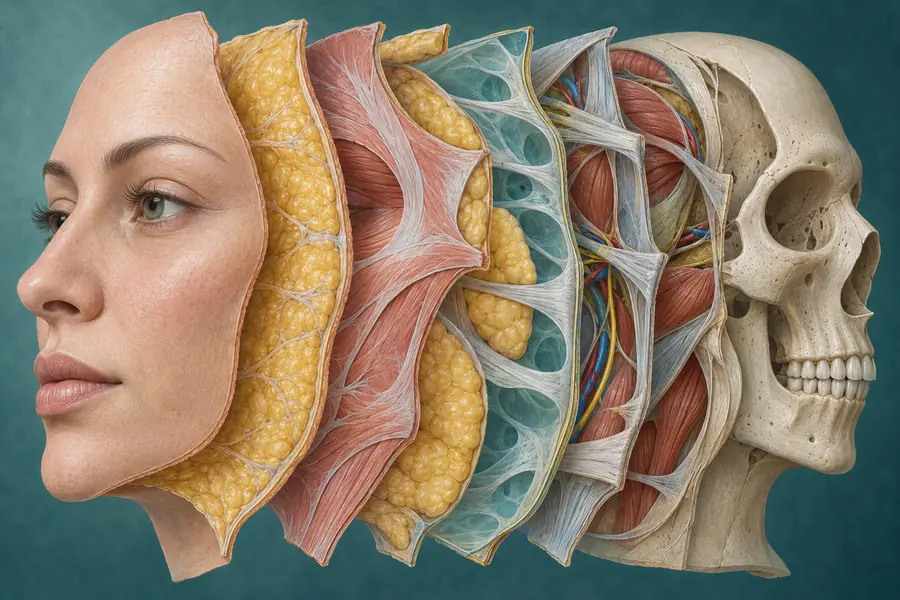
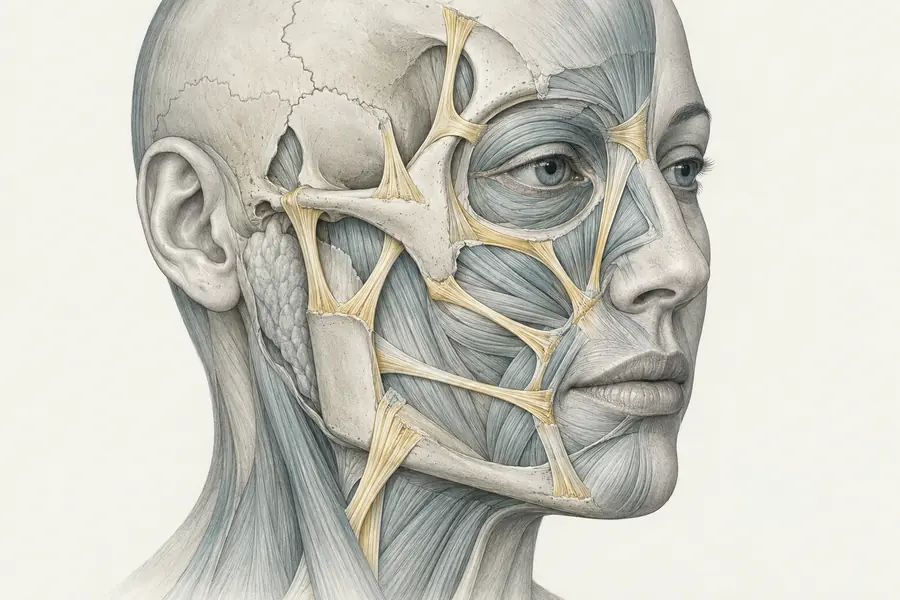
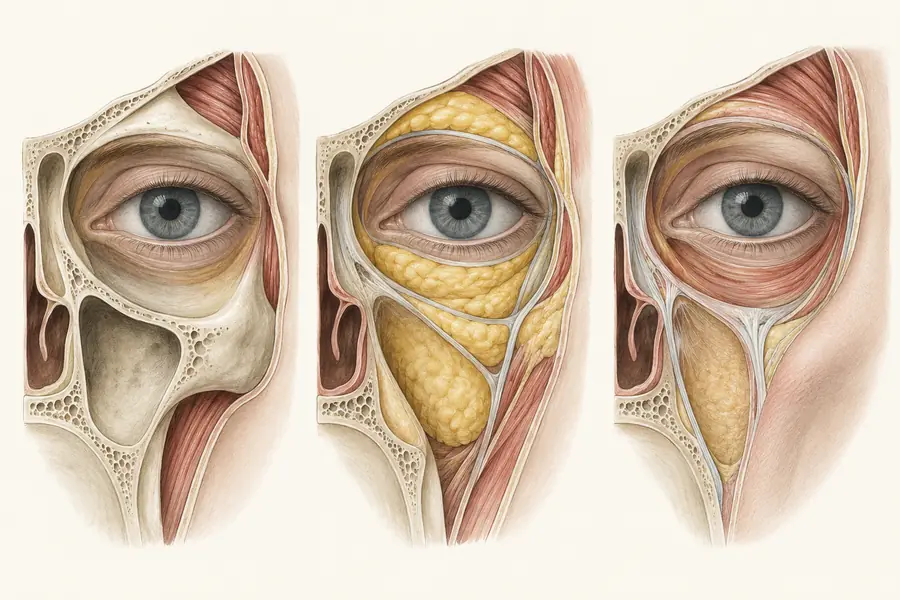
The retaining ligaments of the face anchor skin and superficial fascia to bone or to the deep fascia beneath. They are why the ageing face develops discrete folds rather than descending as a sheet.
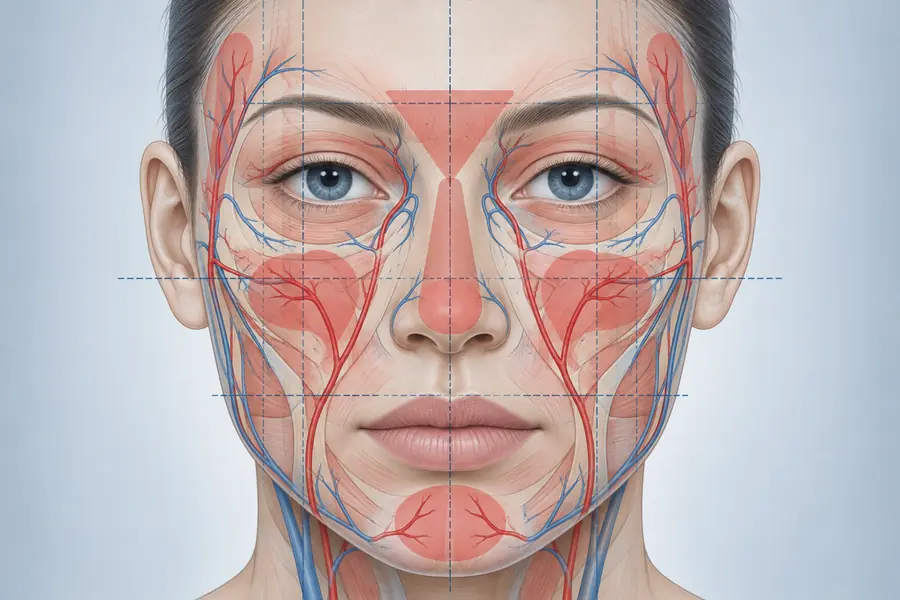
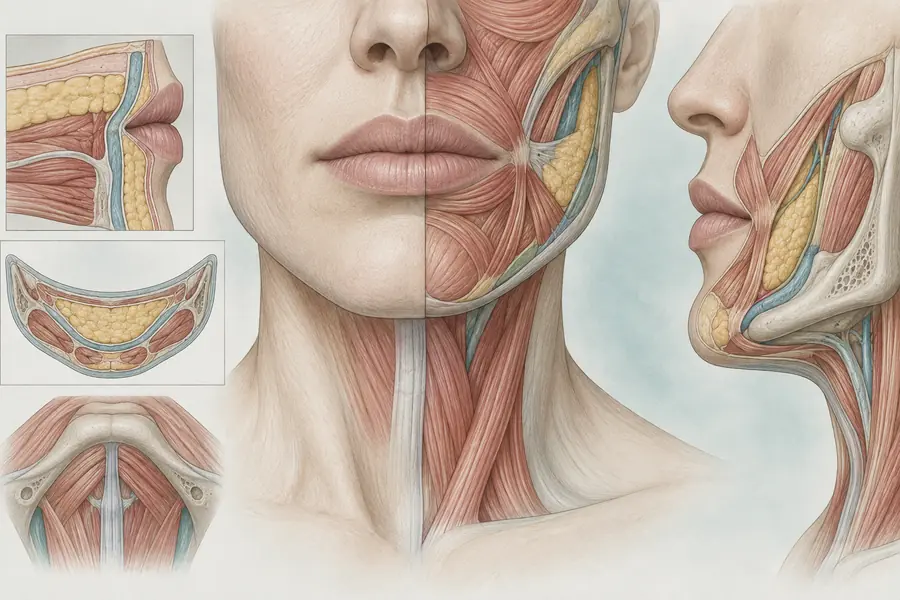
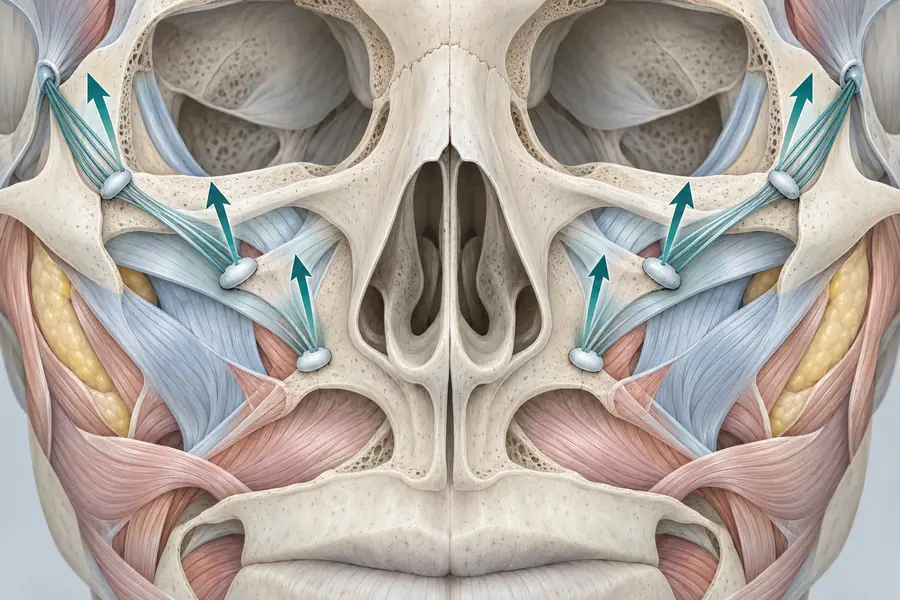
The principal named structures are the zygomatic ligament over the malar eminence, the mandibular ligament near the parasymphyseal mandible, the masseteric ligaments along the anterior masseter border, and the orbital retaining ligament encircling the orbital rim.
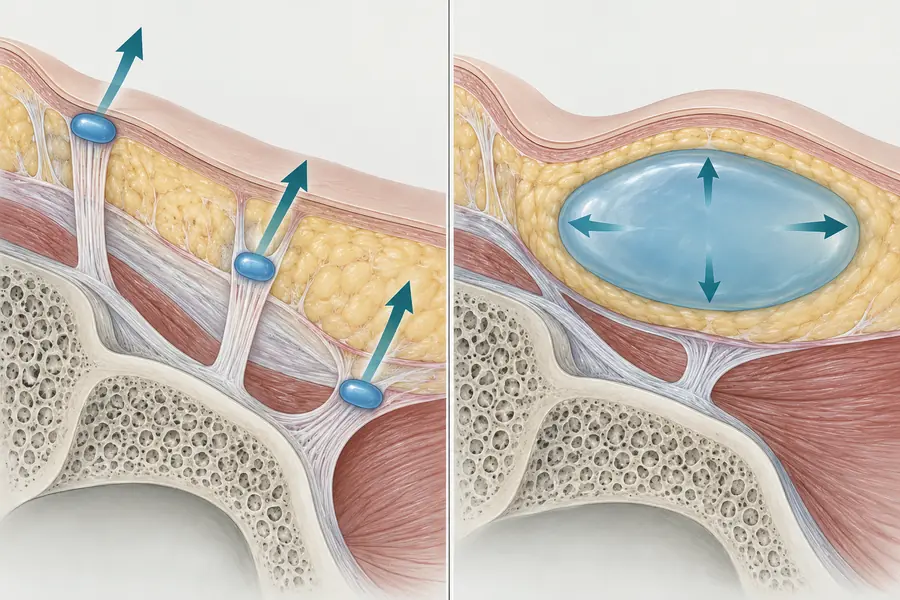
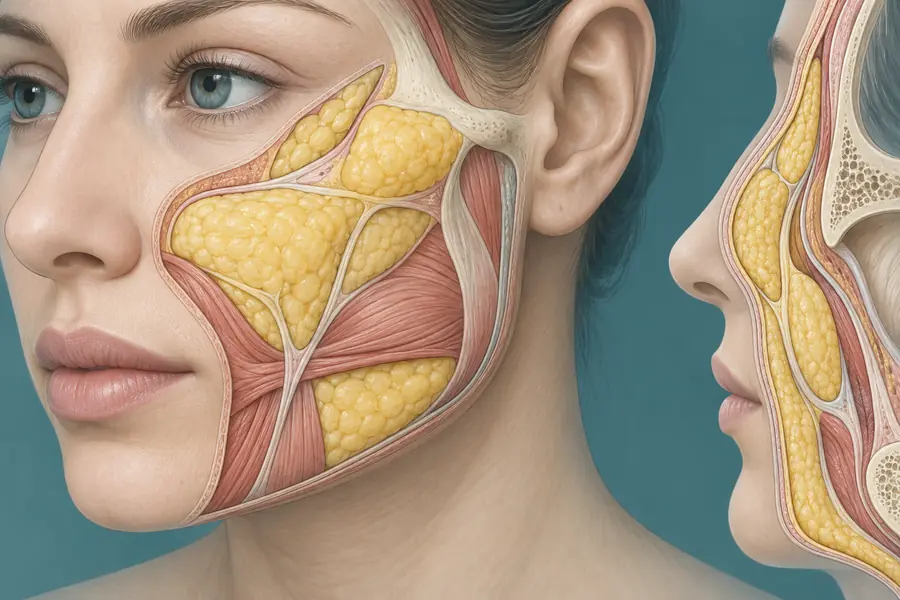
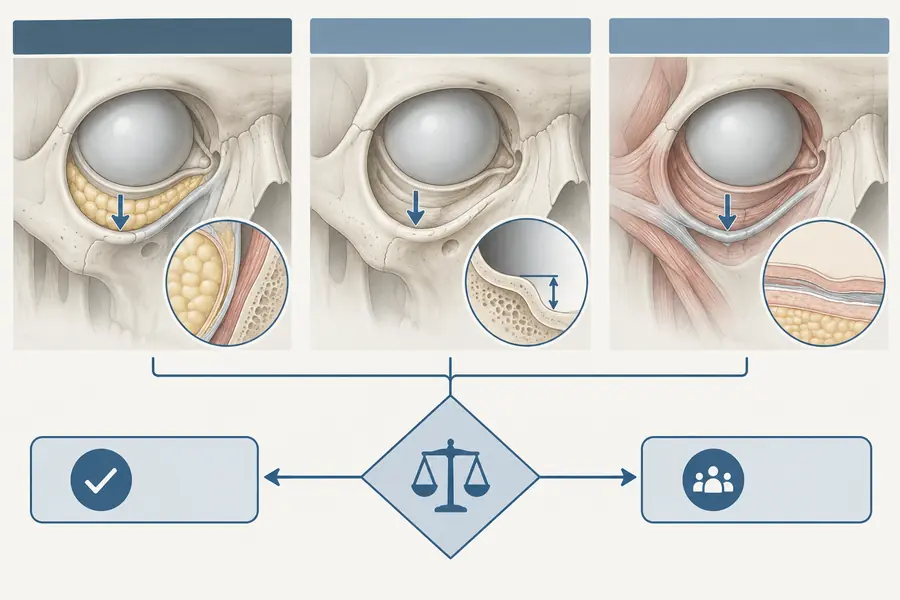
Their functional role is to divide the face into fat compartments. Where a ligament tethers, tissue stays put; where it does not, tissue descends. The visible result is a fold at the boundary. The nasolabial fold, the labiomandibular fold and the tear trough are all expressions of this — the depression sits at a tether, and the fullness sits in the compartment beside it.
The practical consequence for injectable work is that treating the depression itself often fails, because the depression is a fixed anatomical boundary rather than a volume deficit. Supporting the compartment above the tether tends to produce a more natural correction than filling the groove directly. The same reasoning explains why some folds resist correction entirely: a ligament cannot be filled away.