Hyaluronic acid
The glycosaminoglycan that forms the basis of most modern dermal fillers — naturally present in skin, crosslinked in products to slow its breakdown.
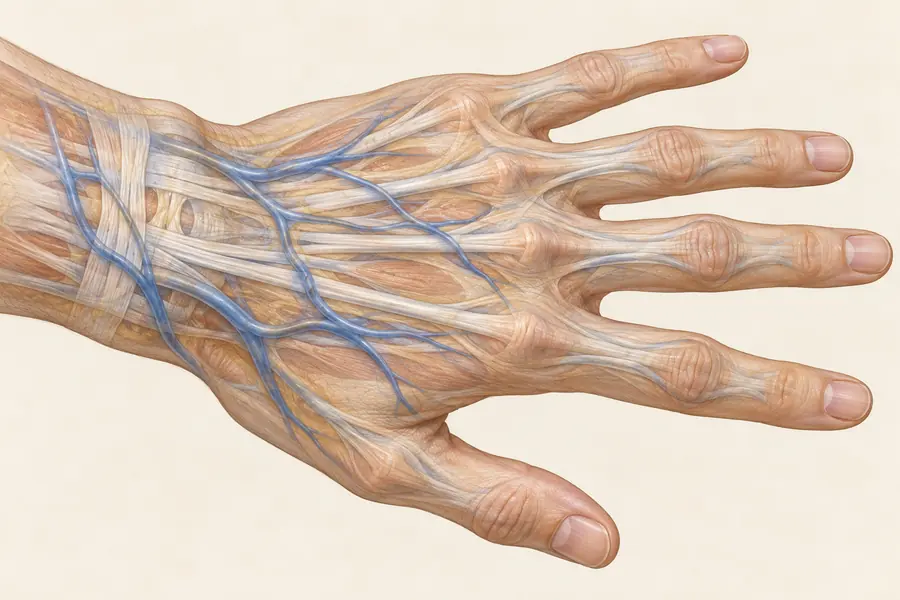
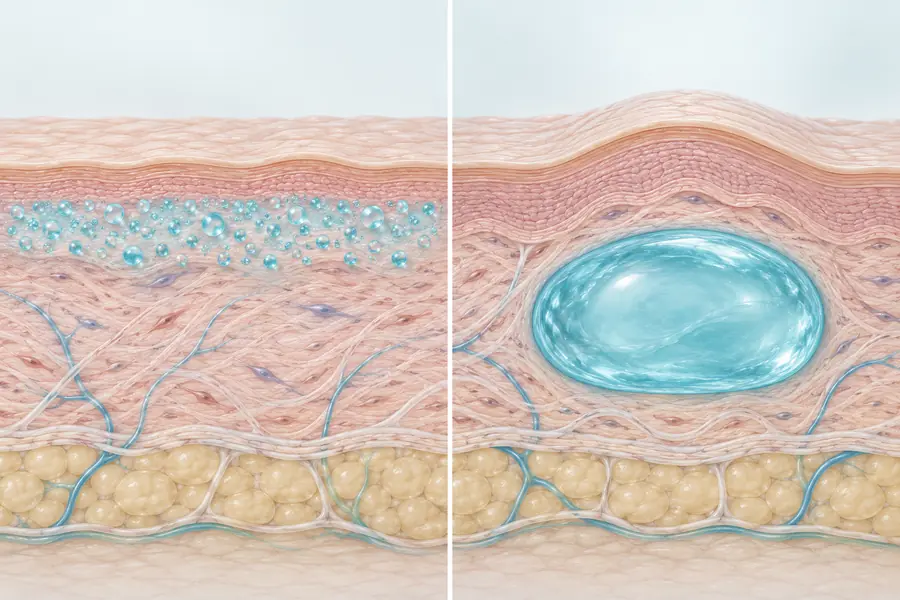
Hyaluronic acid is a glycosaminoglycan found throughout human connective tissue. It binds water — a great deal of it relative to its mass — and gives the dermis much of its turgor.
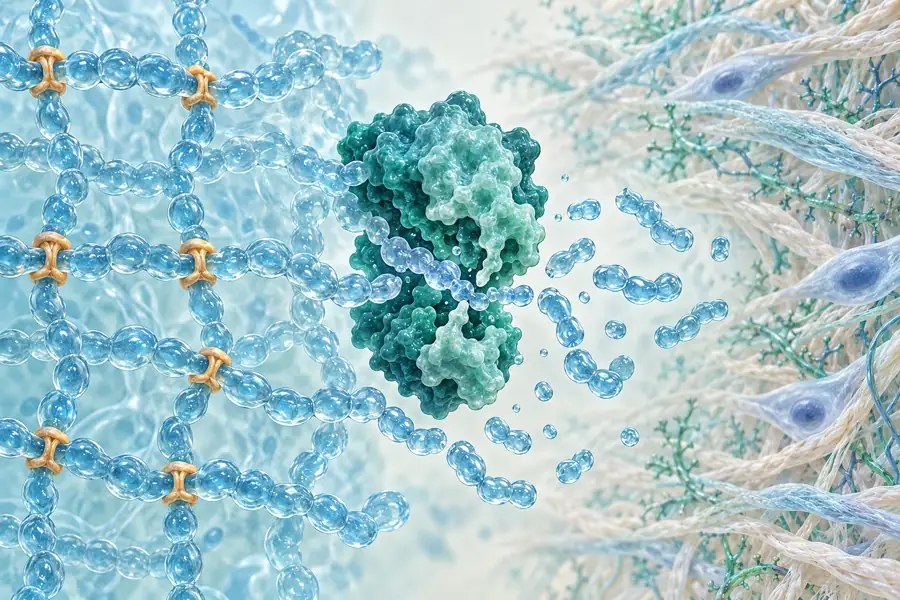
Native HA has a tissue half-life measured in hours to a day or two, which is useless for a filler. Products therefore crosslink the chains, tying them into a gel network that resists enzymatic breakdown. Crosslinking density, the crosslinking agent, particle size and HA concentration together determine how a given product behaves.
Because it is identical in structure across species, HA provokes little immune response, which is why skin testing is not standard practice with it. The clinically decisive property, though, is reversibility: hyaluronidase breaks it down, so a bad result or a vascular event has an antidote. No other widely used filler class offers this, and it is the main reason HA displaced the alternatives.
Its water-binding is also why early post-treatment swelling is normal and why results are usually assessed at two weeks rather than on the day.