Intravascular injection
Inadvertent placement of product inside an artery or vein — the mechanism behind occlusion, tissue necrosis and blindness after filler treatment.
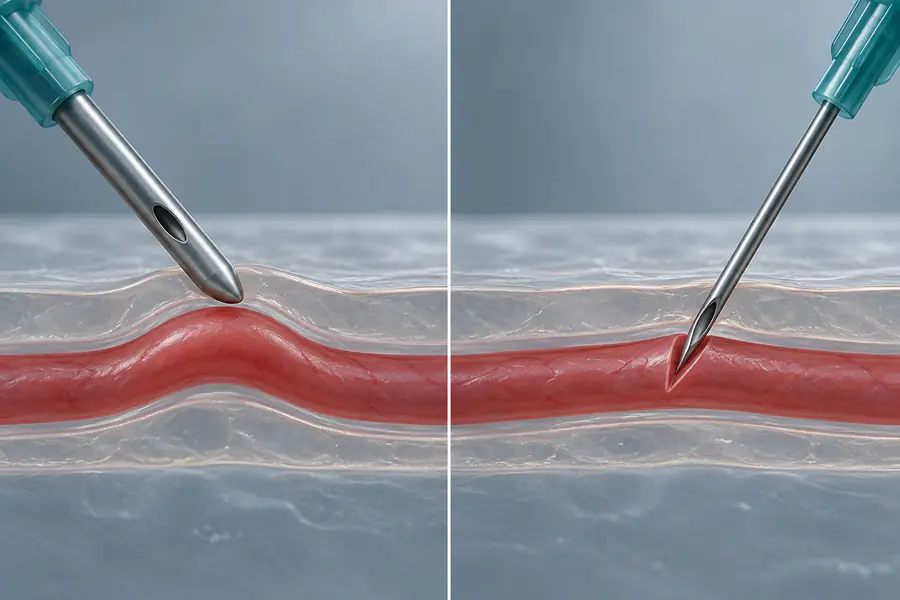
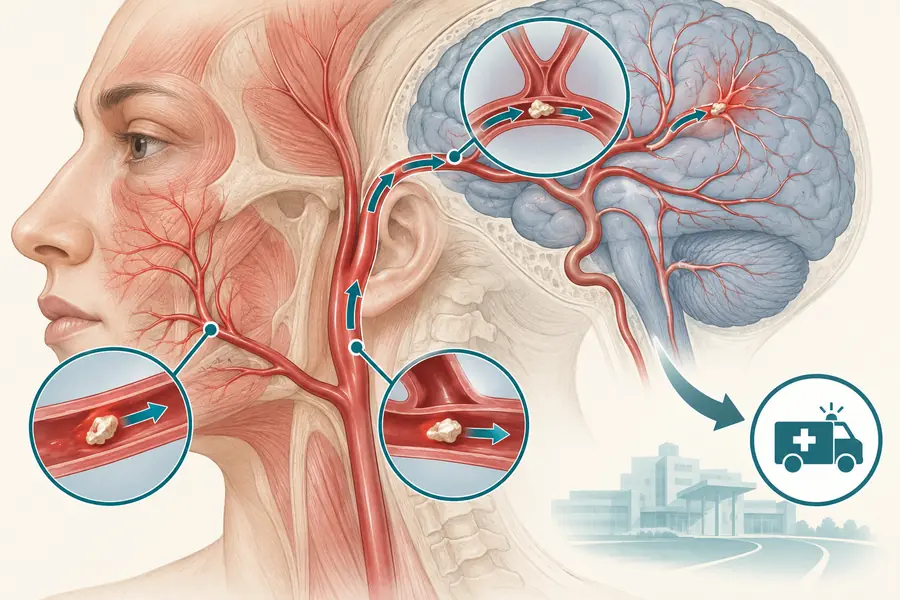
Intravascular injection is the entry of filler into the lumen of a vessel rather than the tissue around it. Everything catastrophic in filler practice follows from it.
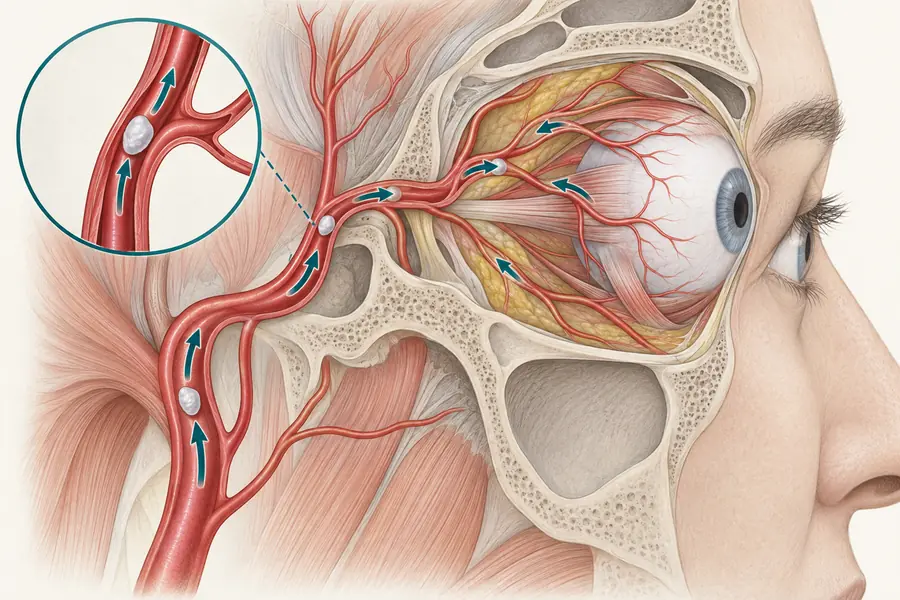
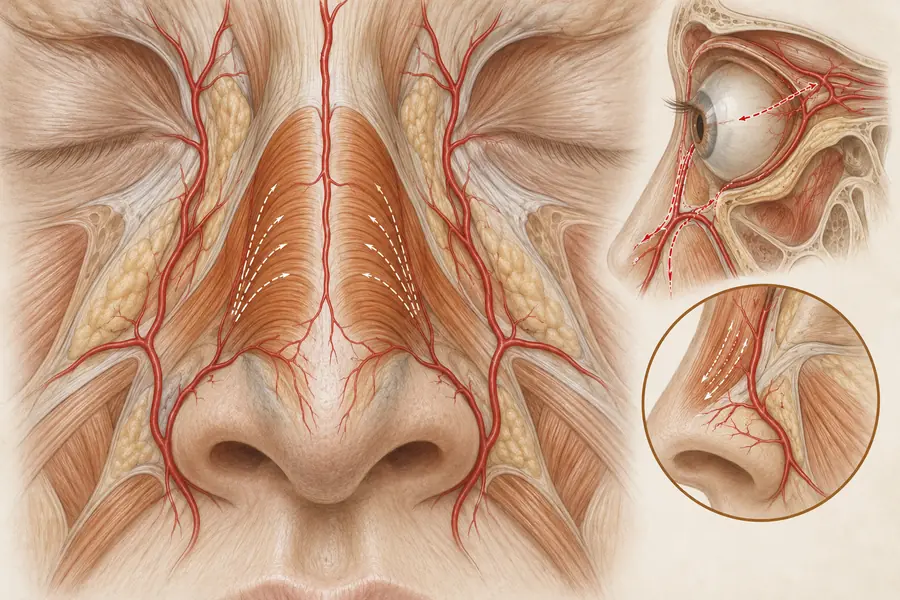
The sequence is mechanical. The needle tip enters a vessel; pressure on the plunger, if it exceeds the pressure in that vessel, drives product along the lumen — forward with flow, or backward against it. Retrograde travel is what carries material past branch points it could not otherwise reach. When injection stops, normal flow resumes and distributes the bolus downstream, potentially into a territory remote from the injection site.
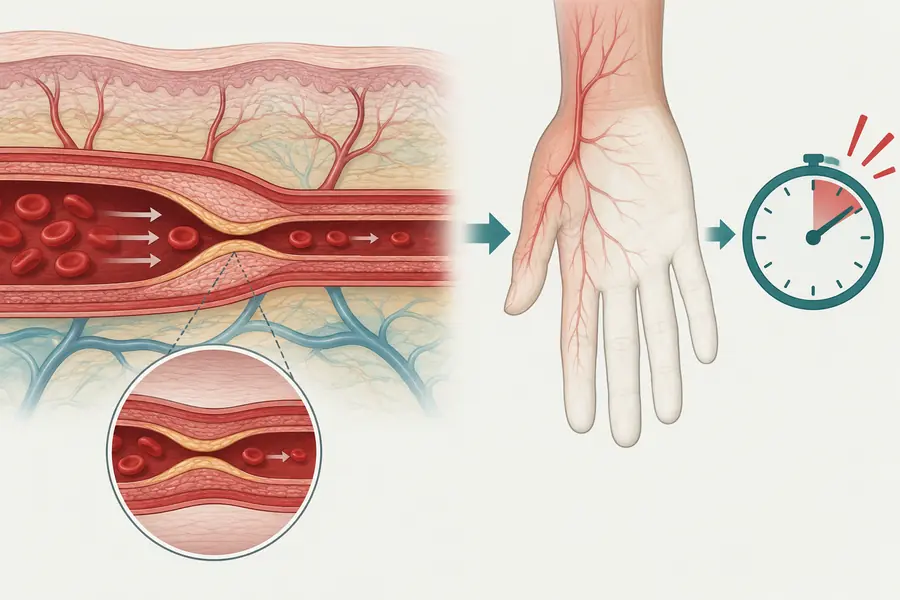
Arterial events produce ischaemia: immediate blanching in the shape of the vessel’s territory, pain that may be severe or oddly absent, then dusky mottling and, untreated, necrosis. Venous events are slower and present with congestion and a dull ache.
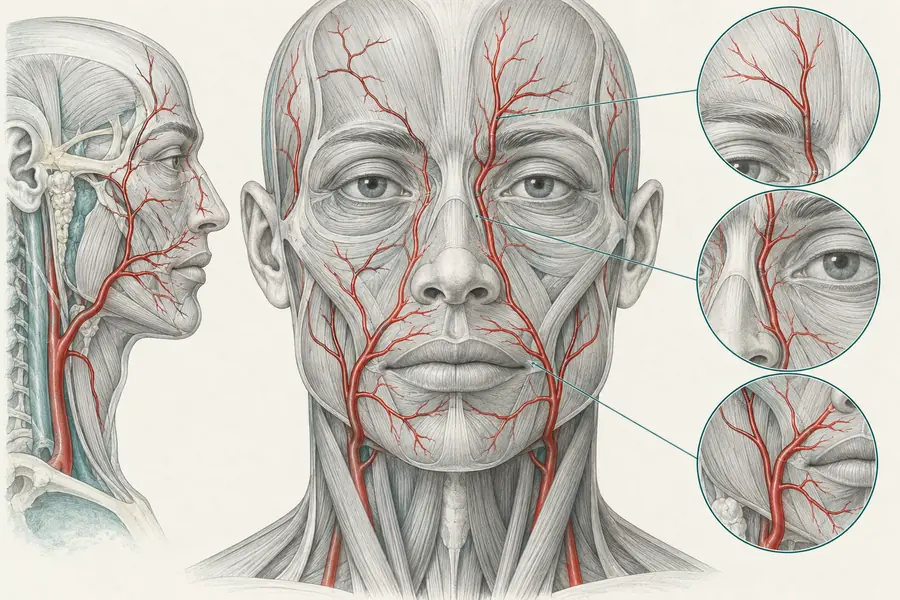
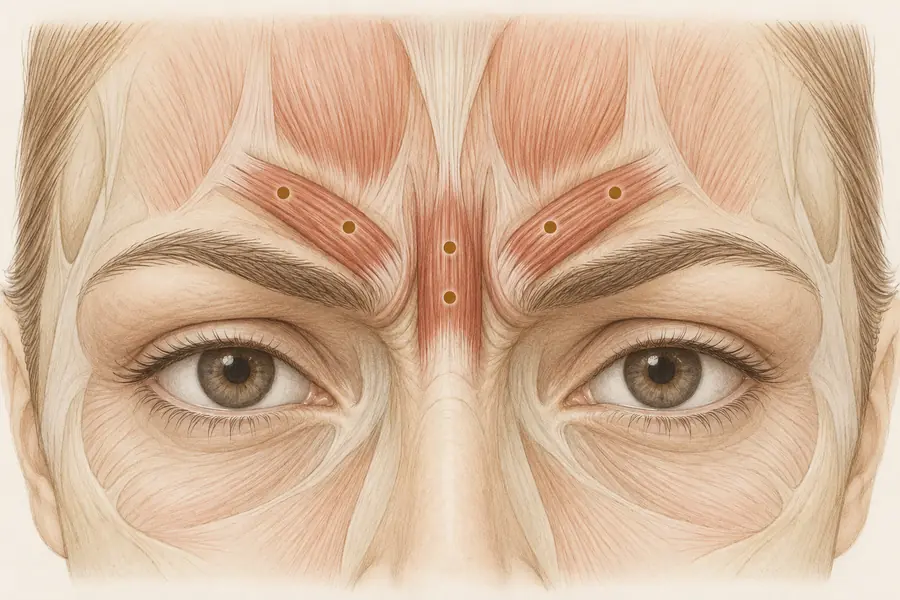
Risk reduction is a stack of small measures, none sufficient alone: knowing the regional vascular anatomy, aspirating where technique permits, injecting slowly at low pressure, using small aliquots, keeping the tip moving, and preferring cannulas in the regions with the worst reported record. None of these makes an intravascular event impossible, which is why the management plan and the hyaluronidase exist before the treatment starts.