Loss of vision
Partial or complete blindness following filler injection, caused by embolic occlusion of the retinal or ophthalmic circulation; largely irreversible, with a window of roughly 60–90 minutes.
Vision loss is the most feared complication of facial filler injection. It is rare, and it is overwhelmingly permanent.
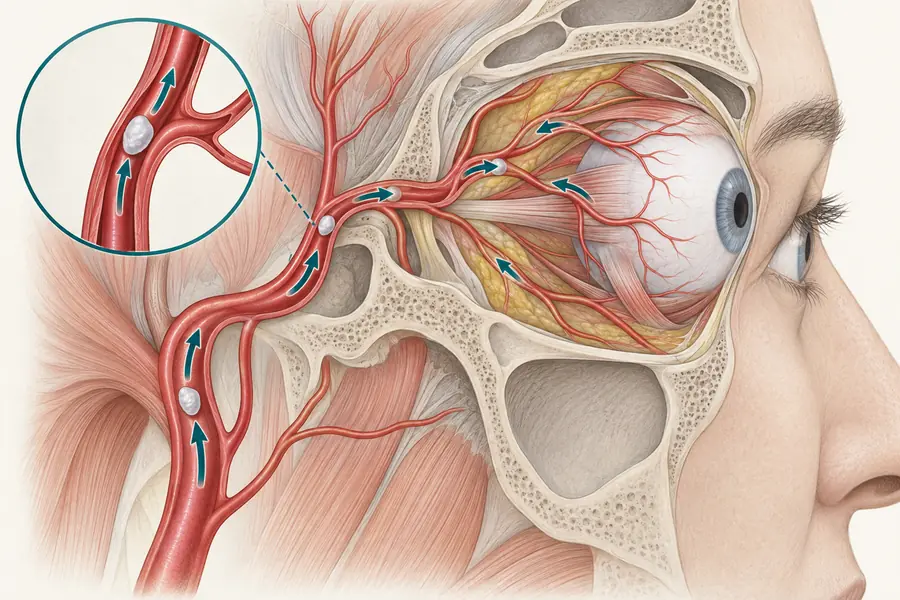
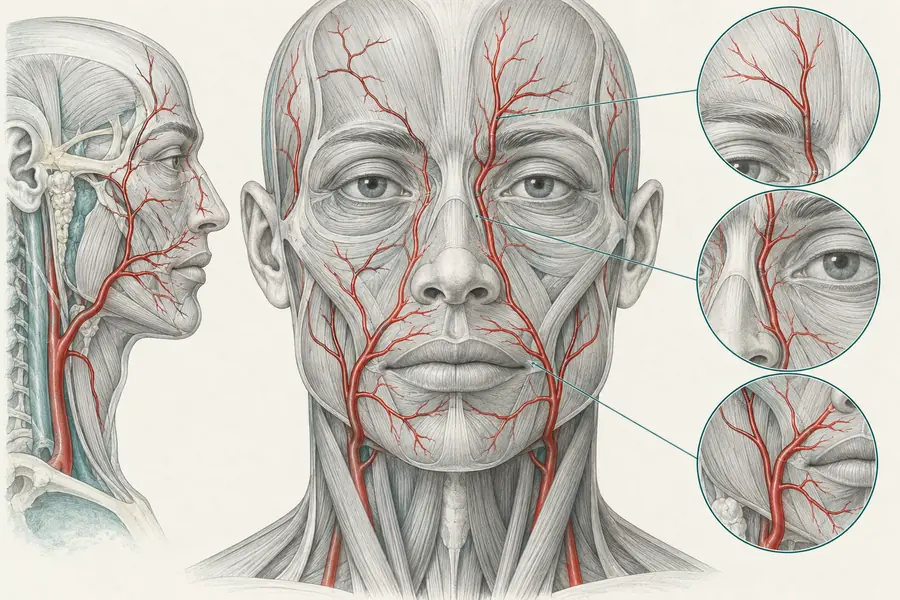
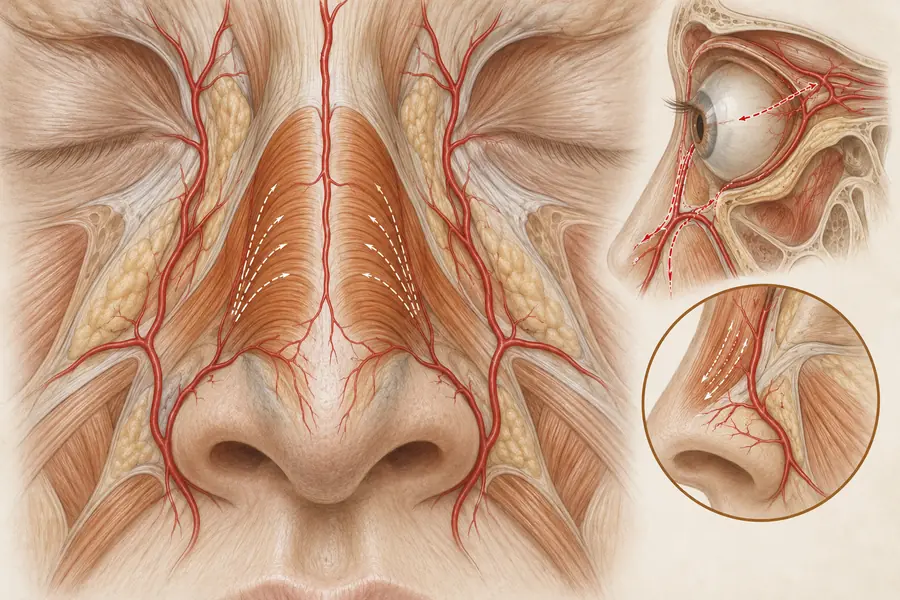
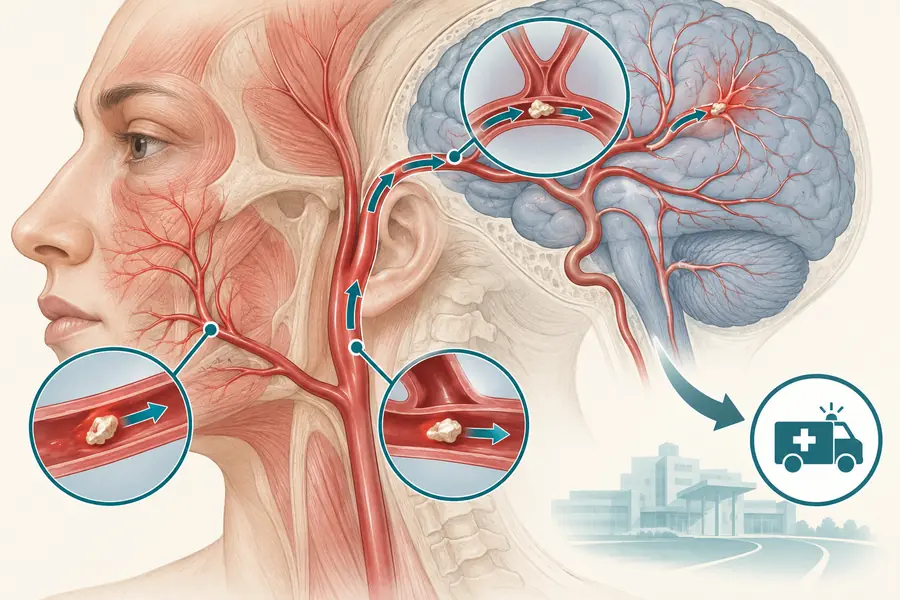
The mechanism is embolic. Filler forced retrograde along a facial artery branch reaches the ophthalmic artery through the anastomoses around the medial canthus and nasal dorsum, then occludes the central retinal artery or its branches when normal flow resumes.
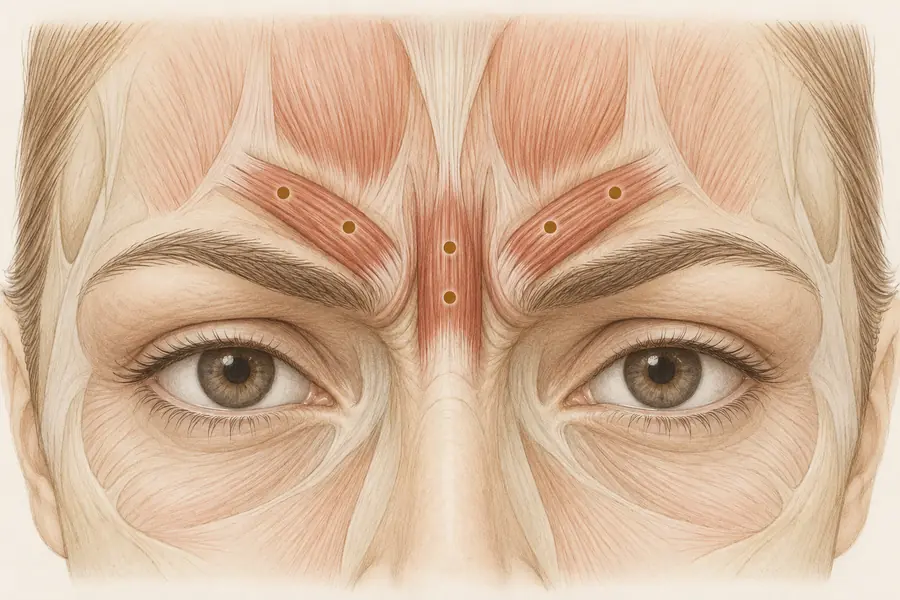
Published case series put the distribution of reported events at roughly 38.8% glabella, 25.5% nasal region, 13.3% nasolabial fold and 12.2% forehead — but the same reviews state plainly that there is no absolutely safe area of the face. Autologous fat is the material most frequently implicated; partial recovery has been described with hyaluronic acid and calcium hydroxylapatite, though irreversible loss remains the usual outcome.
The time constraint is the defining feature: once the retinal artery is occluded, the reported window before blindness becomes irreversible is about 60 to 90 minutes. That is shorter than most referral pathways, which is why protocols emphasise recognition and immediate action over investigation.
The volume argument follows from the same anatomy. The supratrochlear artery from glabella to orbital apex holds roughly 0.085 mL, so aliquots at critical points are kept below that.