Facial lymphatics
The drainage network of the face, whose disruption or obstruction by product explains persistent post-treatment swelling, particularly in the periorbital region.
The facial lymphatics drain toward the submandibular, parotid and submental nodes, running largely in the superficial subcutaneous plane and following the course of veins.
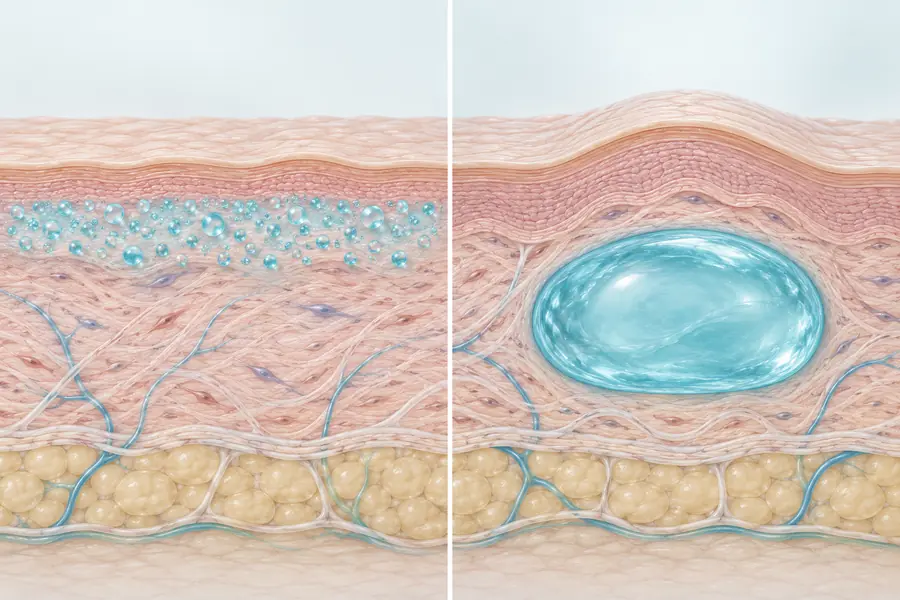
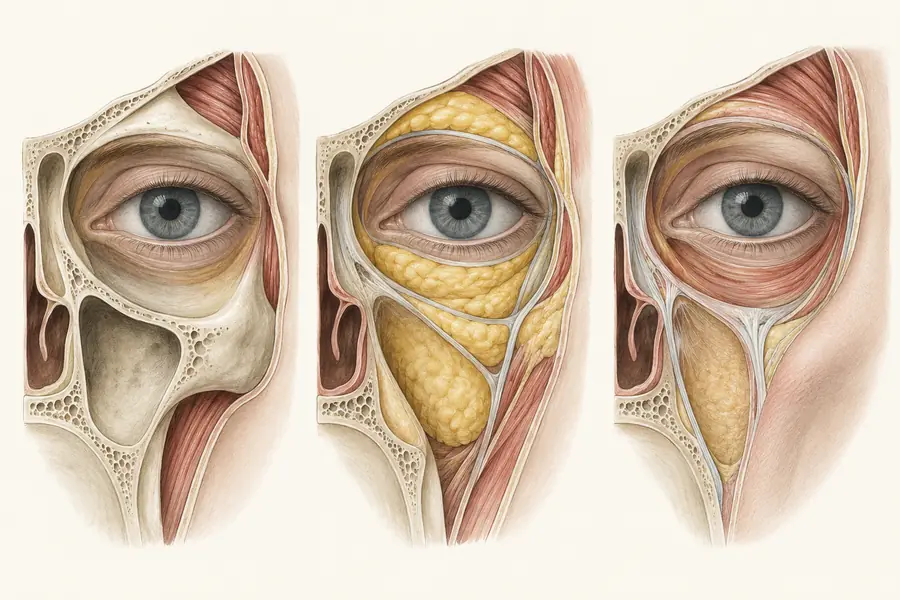
Their relevance to injectable practice is swelling that will not settle. In the infraorbital region the lymphatic network is sparse and the tissue plane is thin, so malar oedema after tear trough treatment is a recognised and sometimes stubborn problem — persisting for months and, in some cases, only resolving after the product is dissolved.
Two mechanisms are described. Product placed too superficially can obstruct drainage mechanically. And hyaluronic acid binds water, so a hygroscopic gel in a region with limited drainage produces sustained puffiness that patients read as a bad result rather than a physiological one.
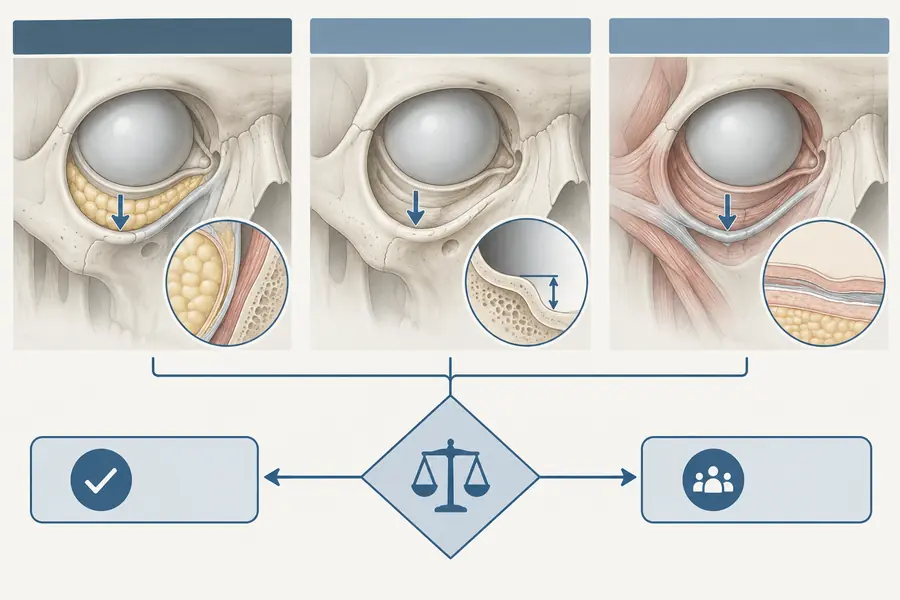
The practical inferences: place deep and conservatively in the infraorbital region, prefer lower-hydrophilicity products where the literature indicates them, and be candid that malar oedema is a known outcome in this area rather than a sign of technical failure.
Pre-existing lymphatic compromise — previous surgery, prior treatment, thyroid eye disease — raises the risk and is worth asking about.