Midface
Also written: mid-faced
The region between orbital rim and mouth — cheek, malar eminence, infraorbital hollow and nasolabial fold — where volume loss and ligament tethering combine to produce visible ageing.
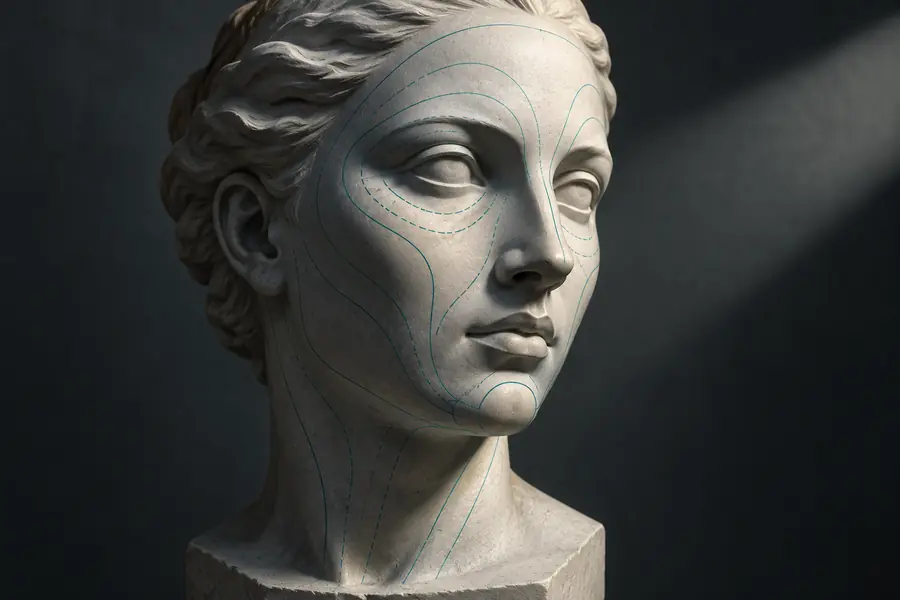
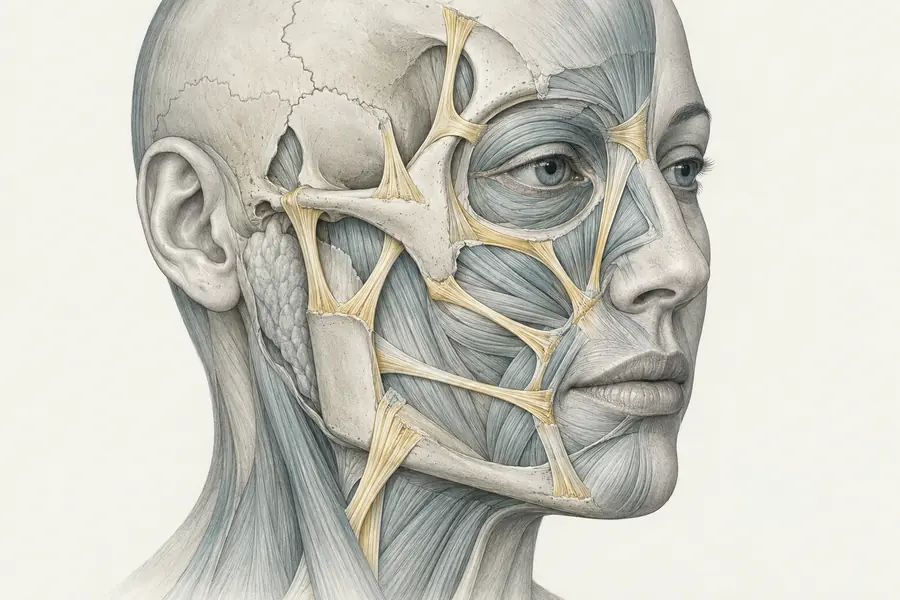
The midface runs from the orbital rim to the level of the mouth and includes the malar eminence, the anterior cheek, the infraorbital hollow and the nasolabial fold.
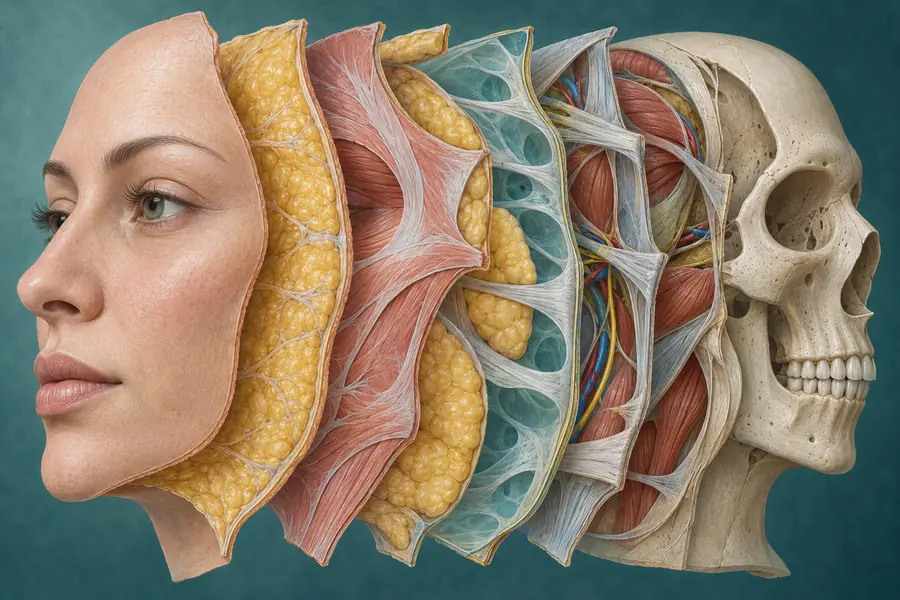
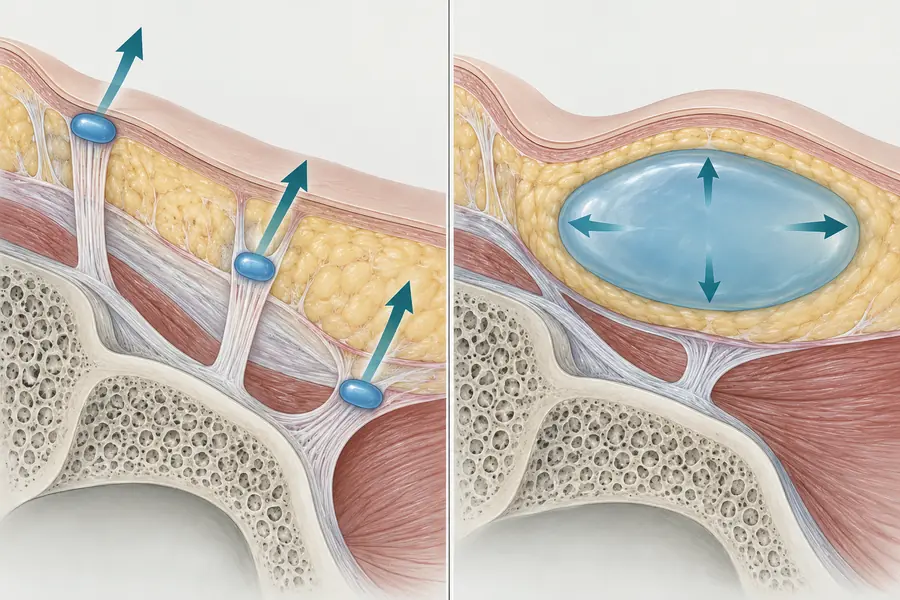
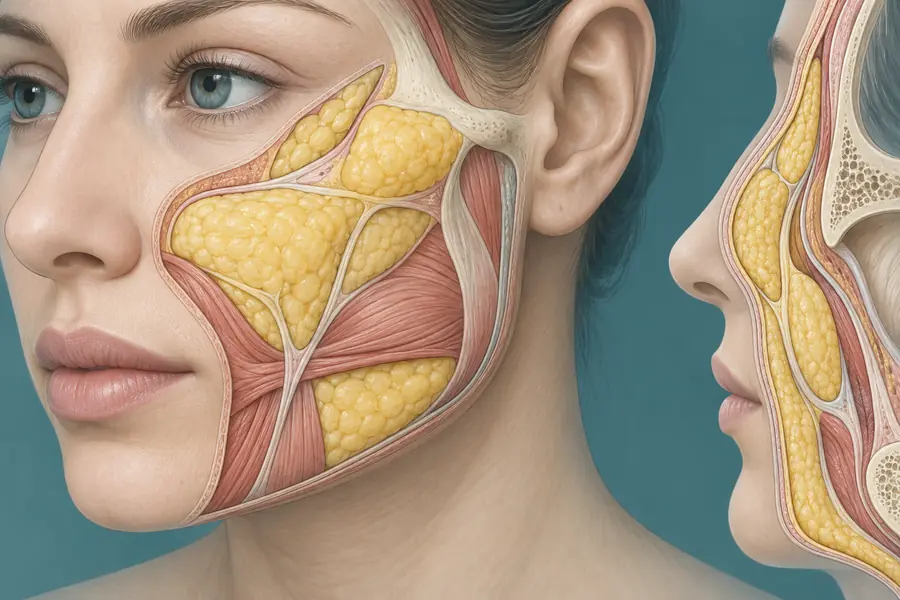
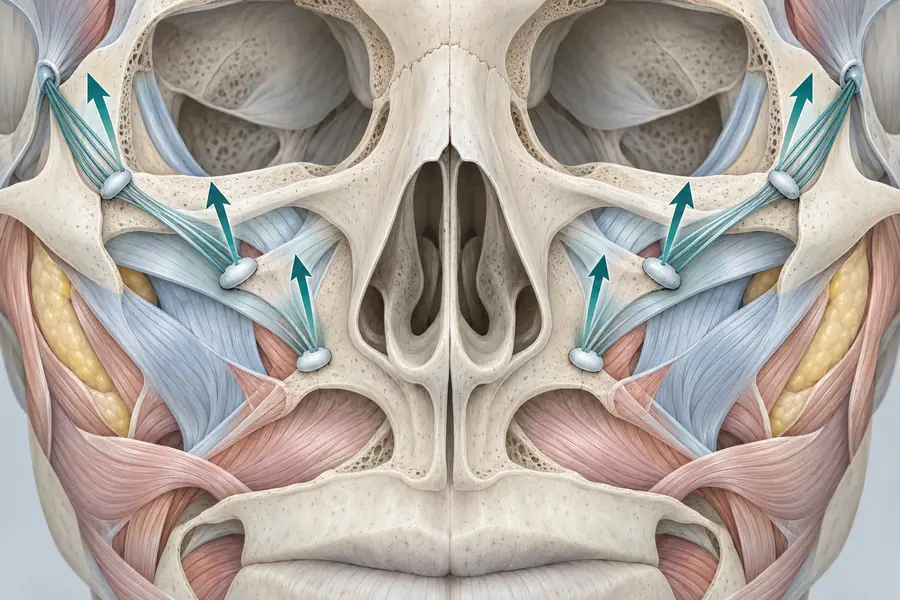
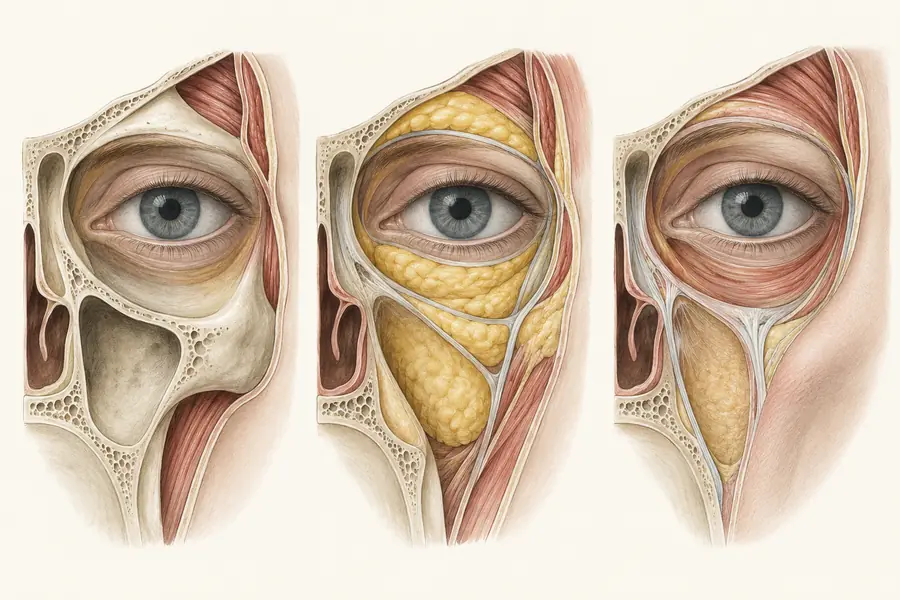
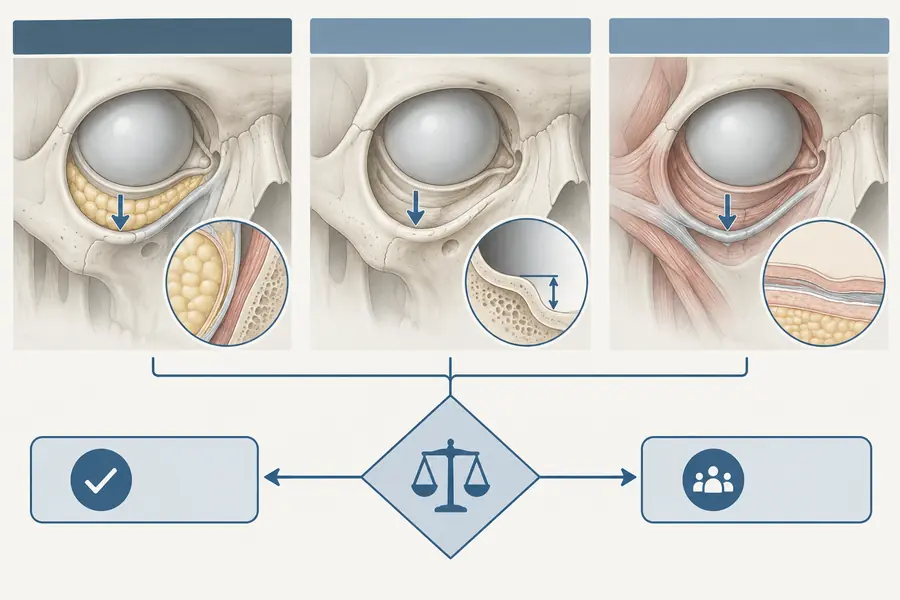
It ages by a combination of three processes. Bone resorbs, particularly at the maxilla and the inferolateral orbital rim, removing the platform beneath the soft tissue. The superficial and deep fat compartments lose volume unevenly, so some deflate while others persist. And the retaining ligaments stay put, so descending tissue folds at fixed boundaries rather than sliding smoothly.
The visible result is a set of shadows: a hollow beneath the eye, a flattened cheek highlight, a deepened nasolabial fold. The instinct is to fill the shadows, and it is usually wrong. Filling the nasolabial fold directly treats a ligamentous boundary as though it were a volume deficit, and the outcome tends to look heavy. Restoring the deep medial cheek fat and the malar platform addresses the cause and improves the fold indirectly.
The midface is also where the infraorbital artery, the angular artery and the facial vein run, and where the infraorbital foramen sits — roughly a centimetre below the orbital rim in the mid-pupillary line.