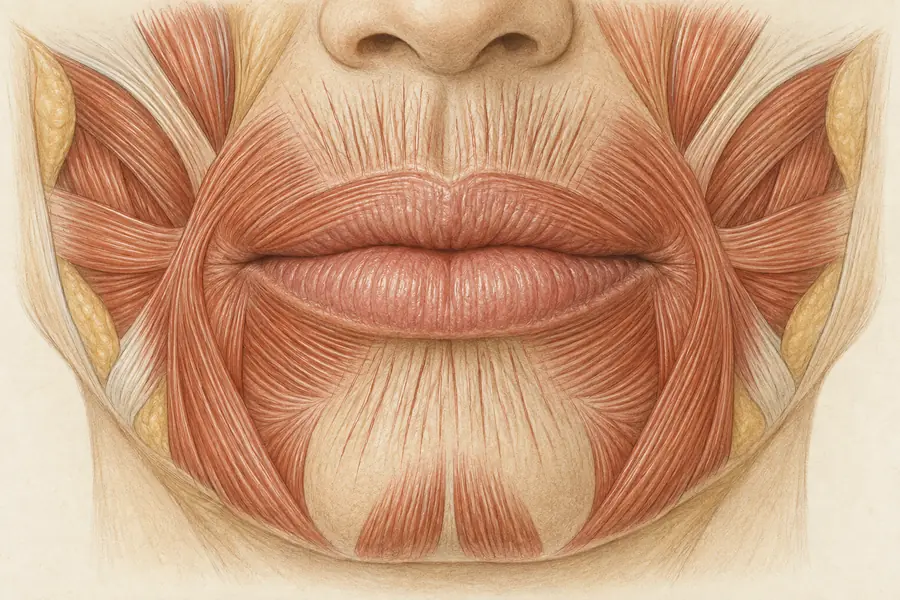
Perioral region
The lips and surrounding muscular complex, where a dense arterial supply, thin mucosa and constant functional demand make small errors immediately visible.
The perioral region is anatomically busy and functionally unforgiving.
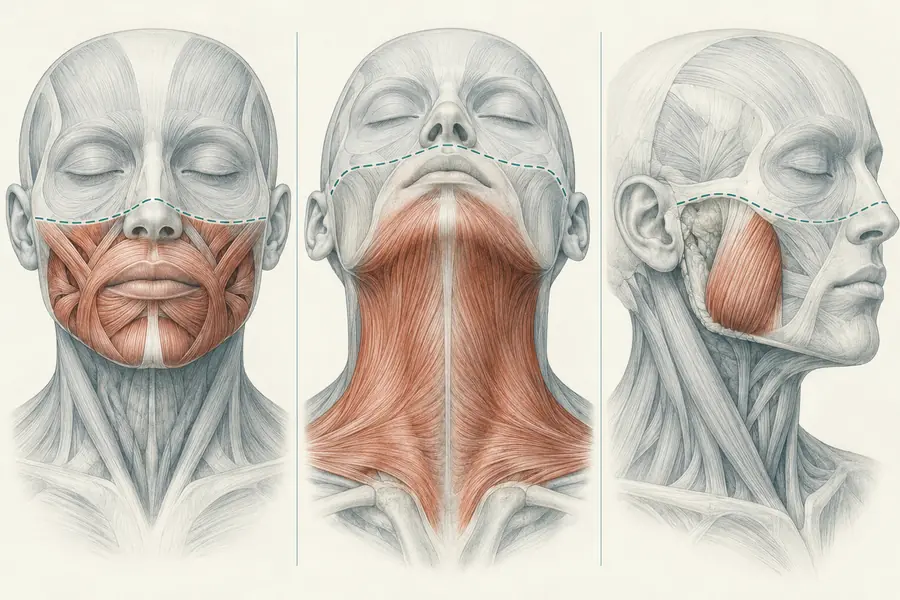
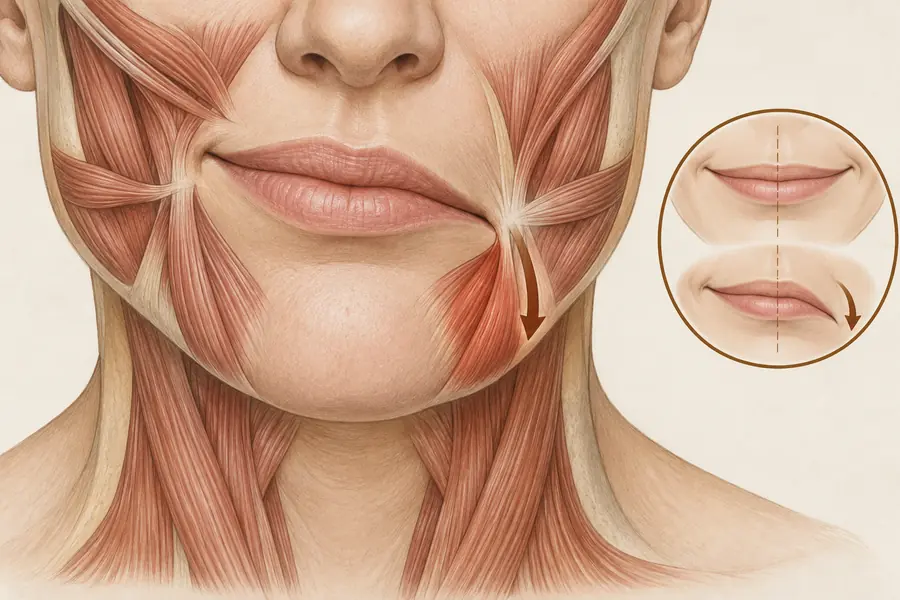
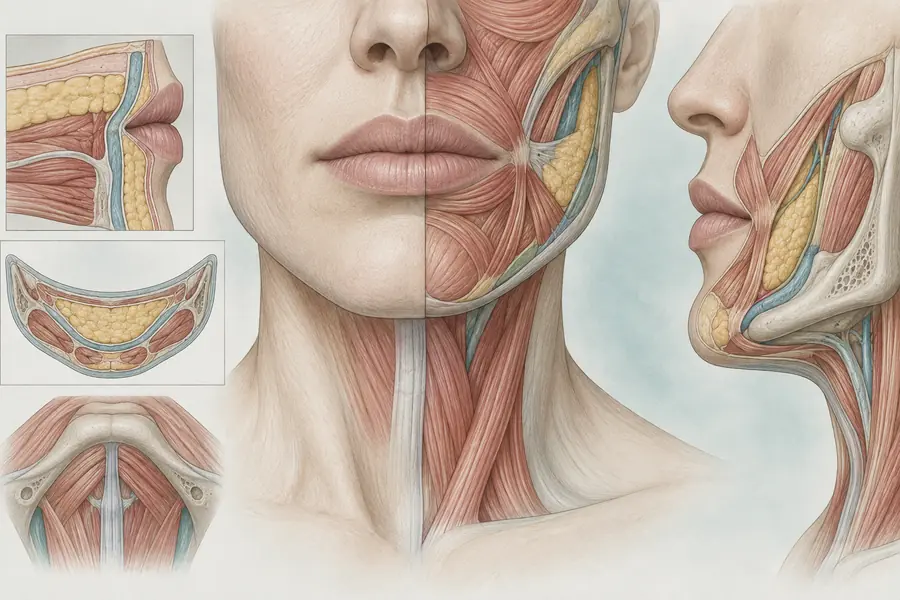
The muscular arrangement centres on orbicularis oris, a sphincter into which the elevators and depressors of the lip insert — levator labii superioris, zygomaticus major and minor, depressor anguli oris, depressor labii inferioris, mentalis. Every one of these participates in speech, eating and expression, so weakening any of them has functional consequences a patient notices immediately.
The vascular supply comes from the superior and inferior labial arteries, branches of the facial artery. They run within or just deep to the orbicularis, most often on the posterior aspect of the lip, close to the wet-dry border. Their exact depth varies between individuals, which is the anatomical reason lip filler carries a real occlusion risk despite being routine.
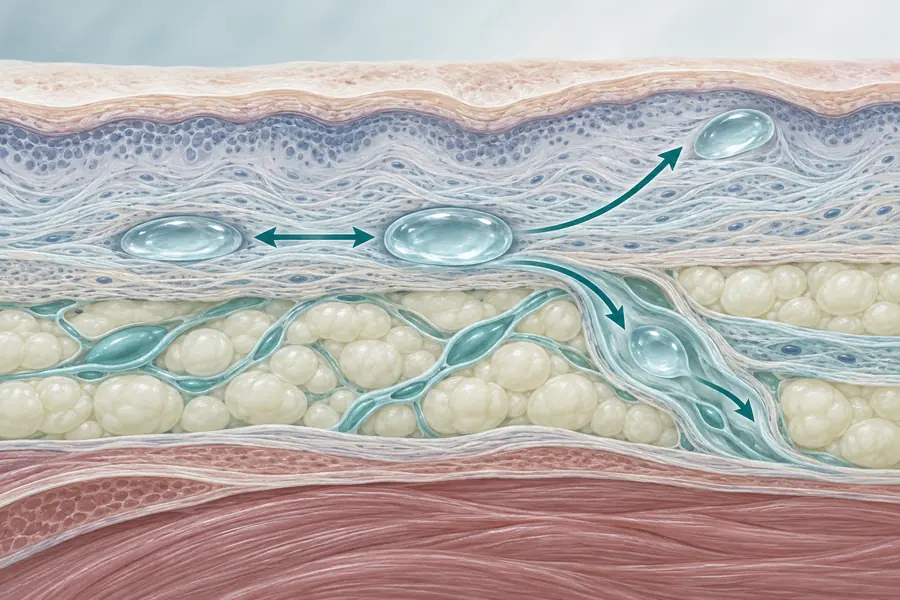
Two failure patterns dominate the literature. Vascular events from injection into a labial artery, presenting as blanching, dusky discolouration and, untreated, mucosal necrosis. And functional or aesthetic distortion from over-volumisation or from toxin diffusion into the depressors, producing an asymmetric or immobile smile.
The perioral area also shows results faster and more publicly than anywhere else on the face, which raises the cost of any misjudgement.