Palsy
Weakness or paralysis of a facial muscle group, in aesthetic practice usually the intended pharmacological effect of botulinum toxin appearing in an unintended muscle.
Palsy in aesthetic practice almost always means diffusion of botulinum toxin into a muscle that was not the target.
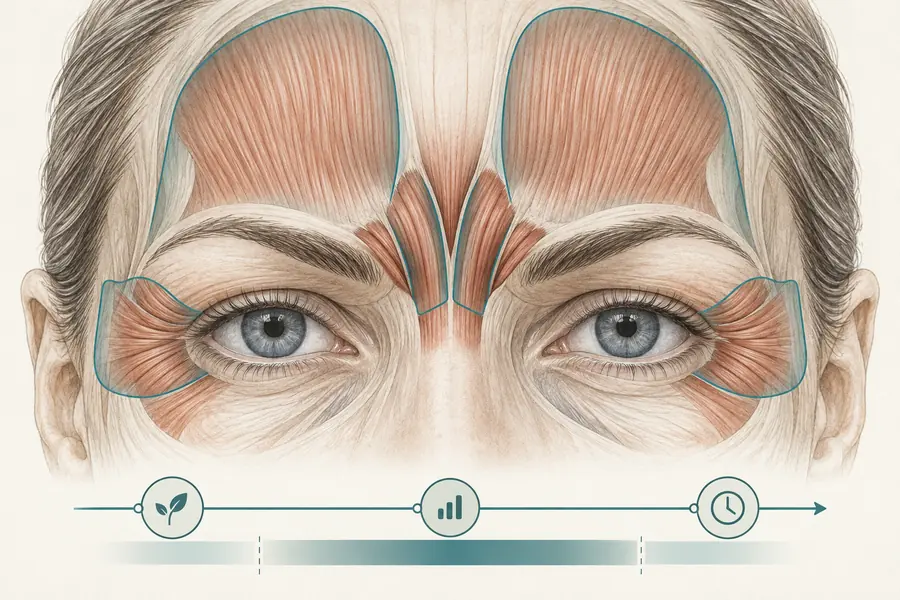
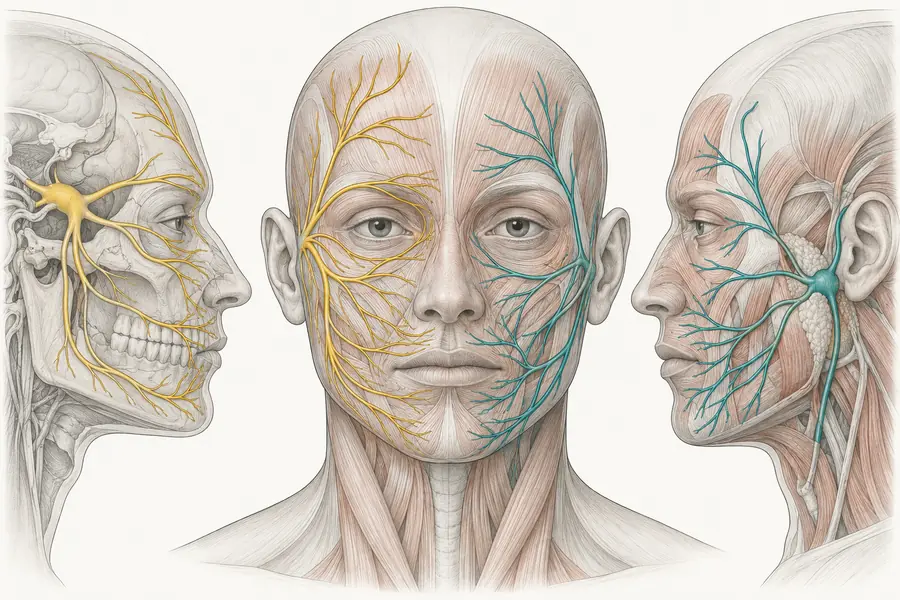
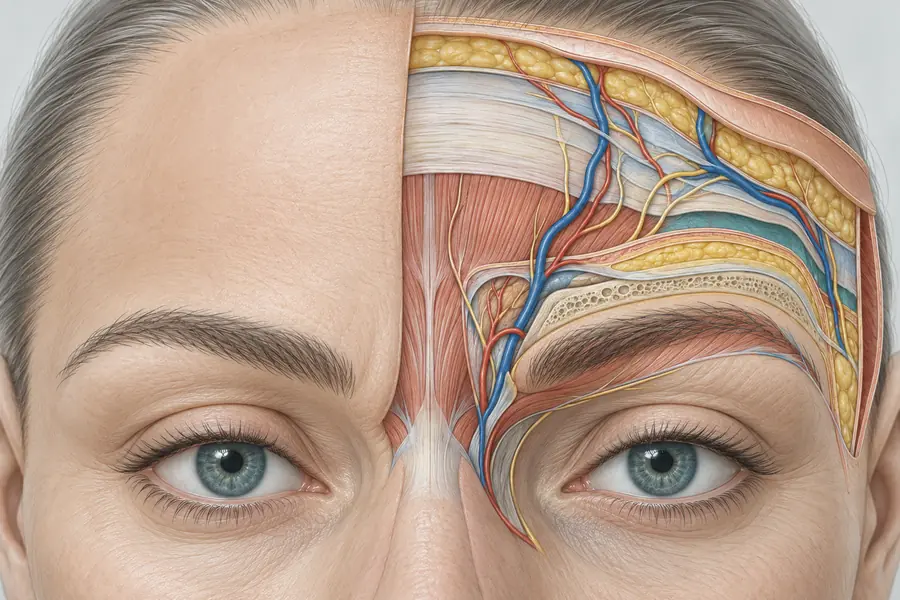
The classic examples are consistent across the literature. Ptosis of the upper eyelid follows toxin reaching the levator palpebrae superioris, usually after glabellar injection too close to or through the orbital septum. Brow ptosis follows over-treatment of the frontalis, which is the only elevator of the brow — weaken it and the brow drops. Lip asymmetry follows spread into the depressor labii inferioris or the zygomaticus complex.
Onset is the diagnostic clue: pharmacological palsy appears over two to seven days, not immediately. Something that happens during the injection is mechanical or vascular, not toxin.
Recovery is spontaneous, over weeks to a few months, as the neuromuscular junction regenerates. Apraclonidine drops can partially raise a ptotic lid in the interim by stimulating Müller’s muscle — a cosmetic mitigation, not a cure.
Prevention is dilution and placement rather than dose alone: higher dilution spreads further, so regions bordering muscles that must be preserved call for concentrated product, small volumes and injection points kept at a defined distance from the orbital rim.