Percutaneous injection
Delivery of product through the skin by needle or cannula — the choice between them being one of the few technique variables with a consistent safety signal.
Percutaneous injection covers the mechanics of getting product through skin into a chosen plane, and the main decision within it is needle versus cannula.
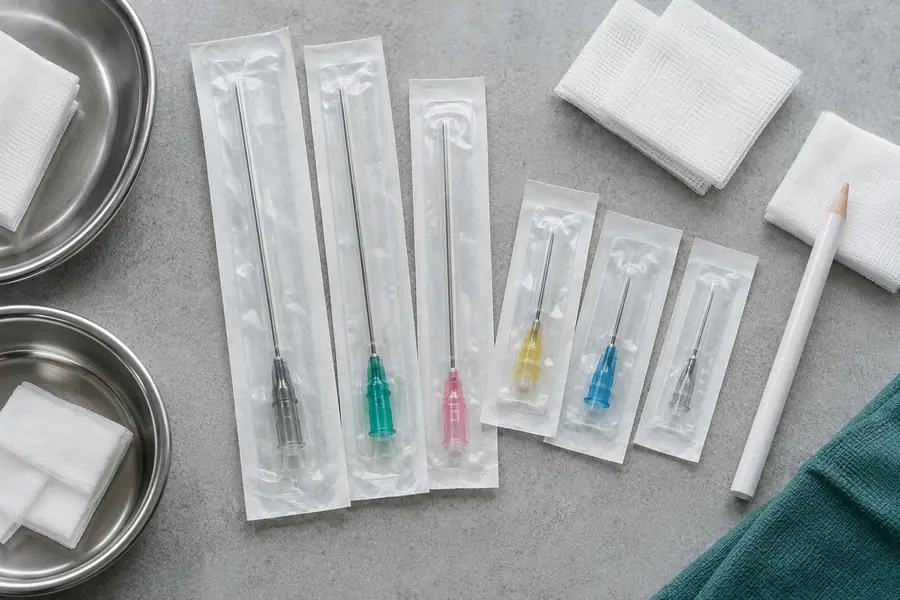
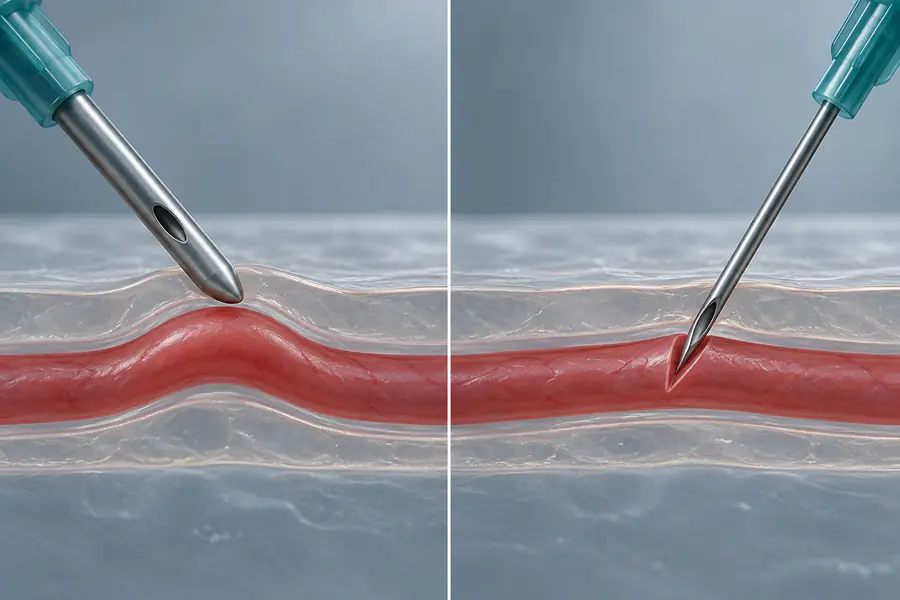
A needle is sharp, precise and short. It gives accurate placement at a defined depth and is appropriate where small volumes go into specific points. It also cuts whatever it meets, including arteries.
A cannula is blunt with a side port, entering through a single pilot hole and advancing through tissue by pushing structures aside rather than dividing them. It does not eliminate intravascular injection — a cannula of small enough gauge can still enter a vessel — but the weight of published evidence associates cannulas with fewer vascular events in the higher-risk regions.
The other variables that recur in guidance:
- Pressure. High plunger pressure is what drives retrograde arterial flow. Slow injection is the single most repeated instruction in complication literature.
- Aliquot size. Small volumes per point limit how much material any single vessel could receive.
- Aspiration. Useful when positive, weakly informative when negative — a negative aspirate does not establish extravascular position.
- Movement. Injecting while the tip is moving reduces the chance of depositing a full bolus inside a lumen.