Tear trough
The groove running inferomedially from the inner canthus, defined by the tear trough ligament and thin overlying skin — anatomically one of the least forgiving areas on the face.
The tear trough is the depression that runs downward and laterally from the medial canthus along the inferior orbital rim.
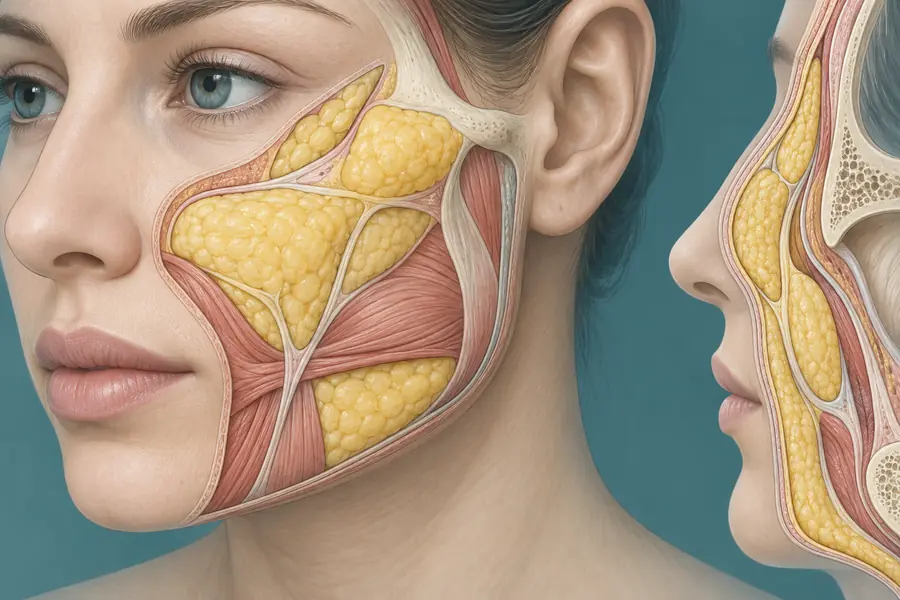
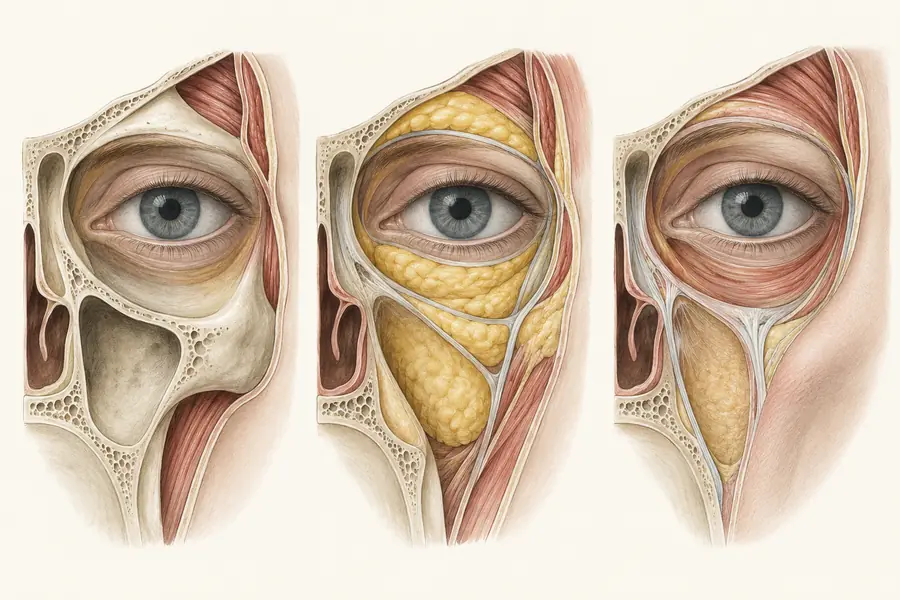
It is not simply a hollow. It marks the tear trough ligament, an osteocutaneous attachment running from the maxilla to the dermis. Above it the skin is the thinnest on the body, with almost no subcutaneous fat and the orbicularis oculi directly beneath. Below it sits the medial cheek fat. The groove exists because the ligament tethers the skin down while the tissue on either side is free to project or deflate.
That anatomy explains why the region is so unforgiving:
- Superficial product is visible. Thin skin over hyaluronic acid produces the bluish Tyndall effect, and lumps show.
- Swelling persists. Lymphatic drainage here is limited and HA is hygroscopic, so malar oedema can last months.
- Vascular risk is real. The angular and infraorbital arteries run in the vicinity, and the region features in the reported vision-loss series.
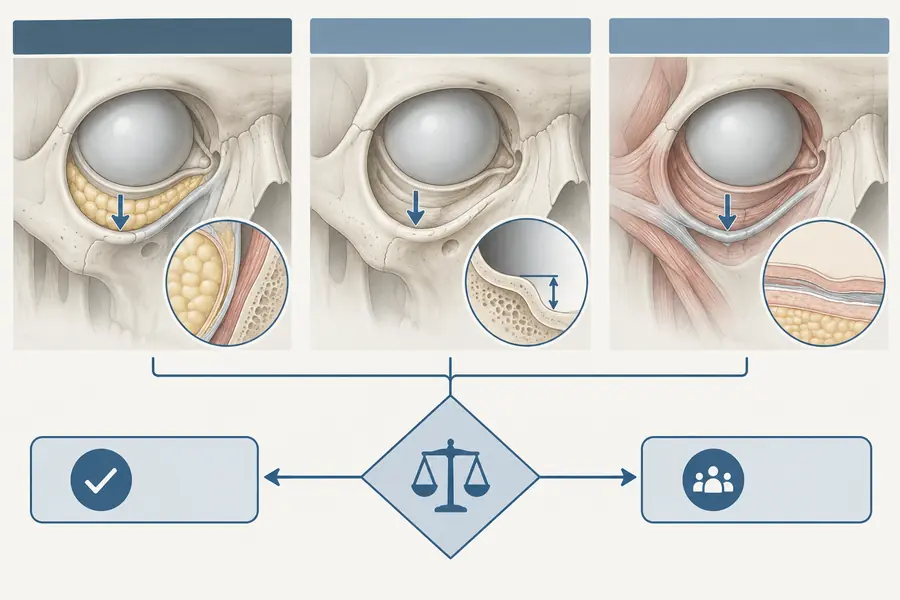
Assessment matters more here than technique. A trough caused by ligamentous tethering, one caused by midface deflation, and one caused by pseudoherniated orbital fat look similar and respond completely differently — the third is not a filler problem at all. Correcting the midface first often reduces the trough without touching it.