Upper face
Forehead, glabella and periorbital region — the licensed territory for cosmetic botulinum toxin and, simultaneously, the site of most reported filler vision loss.
The upper face covers the forehead, glabellar complex and the periorbital region. It carries a striking double status: it is where botulinum toxin is licensed and safest, and where filler is most dangerous.
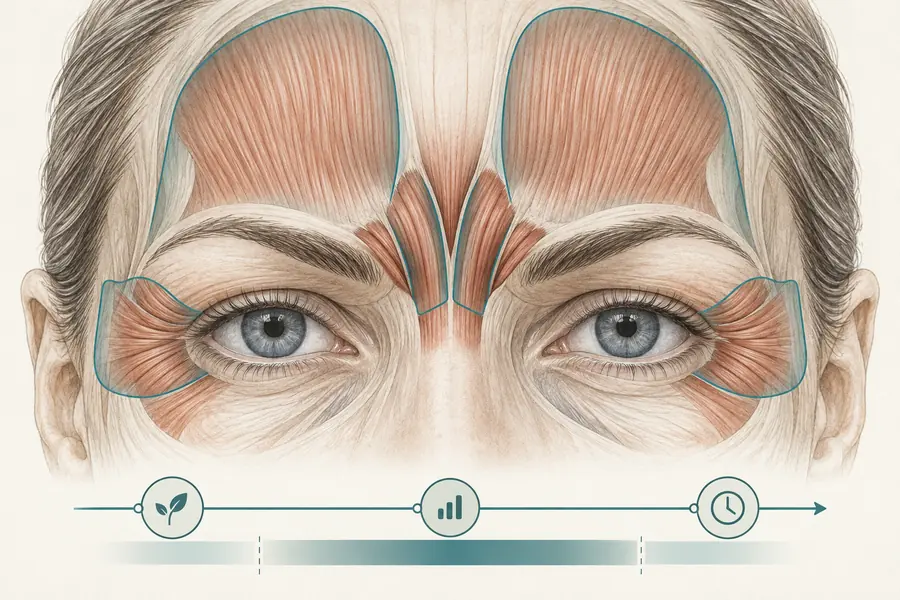
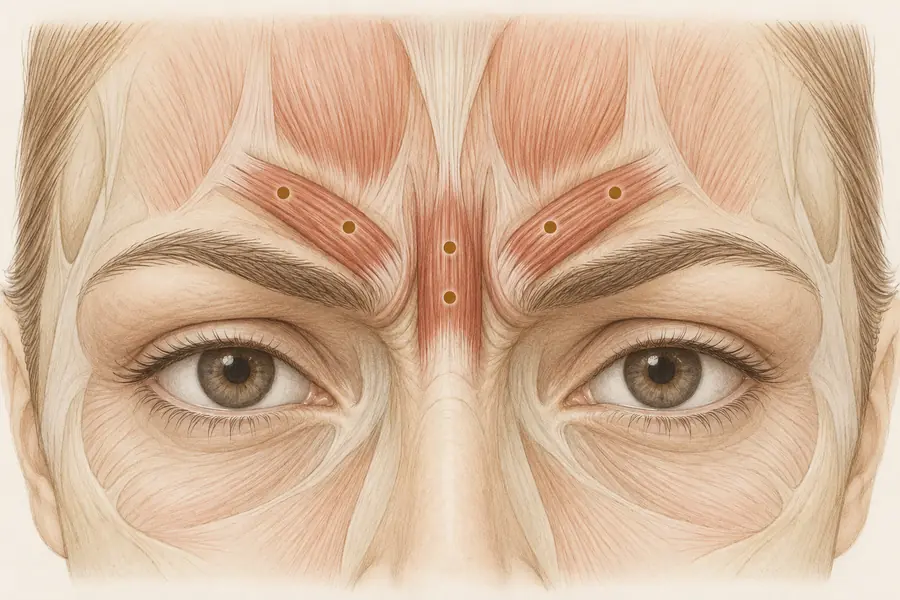
The muscles are few and well characterised. Frontalis elevates the brow and is the only muscle that does. Corrugator supercilii and procerus draw the brows together and down. Orbicularis oculi closes the eye and produces lateral canthal lines.
The consequence for toxin is that the upper face is predictable but has no redundancy. Since frontalis is the sole brow elevator, over-treating it drops the brow with nothing to compensate; and the proximity of the corrugator complex to the levator palpebrae is why glabellar injection technique specifies distance from the orbital rim so precisely.
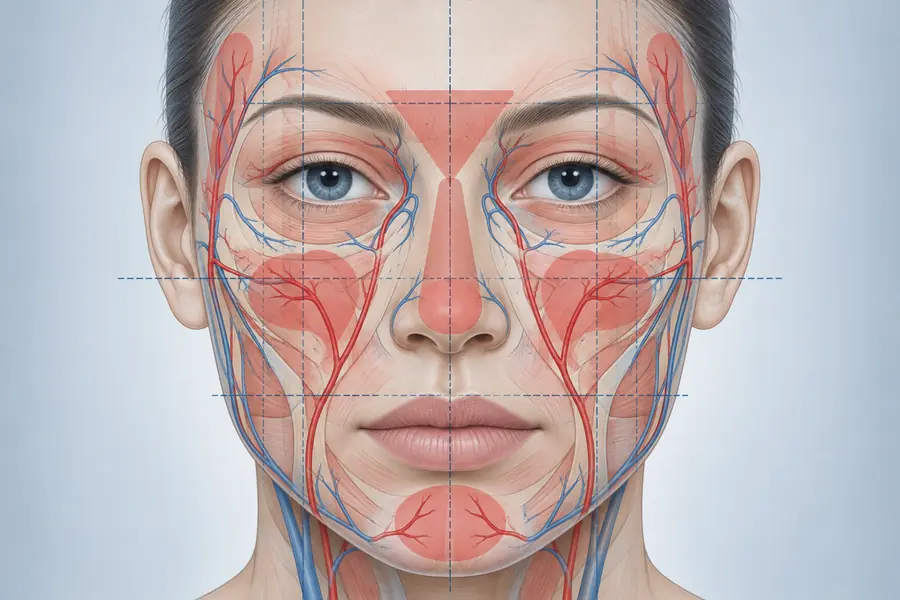
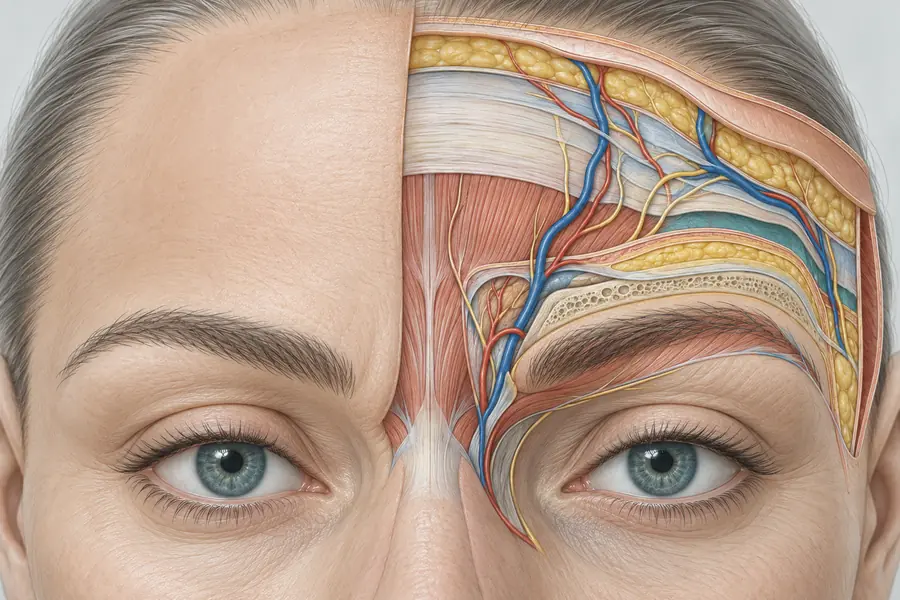
The consequence for filler is the opposite of reassuring. The supratrochlear and supraorbital arteries here are terminal branches of the ophthalmic artery — internal carotid territory, directly continuous with the eye’s supply. Glabella and forehead together account for roughly half of reported blindness cases, and the small calibre of these vessels means very small volumes are enough to fill them.