Vascular supply of the face
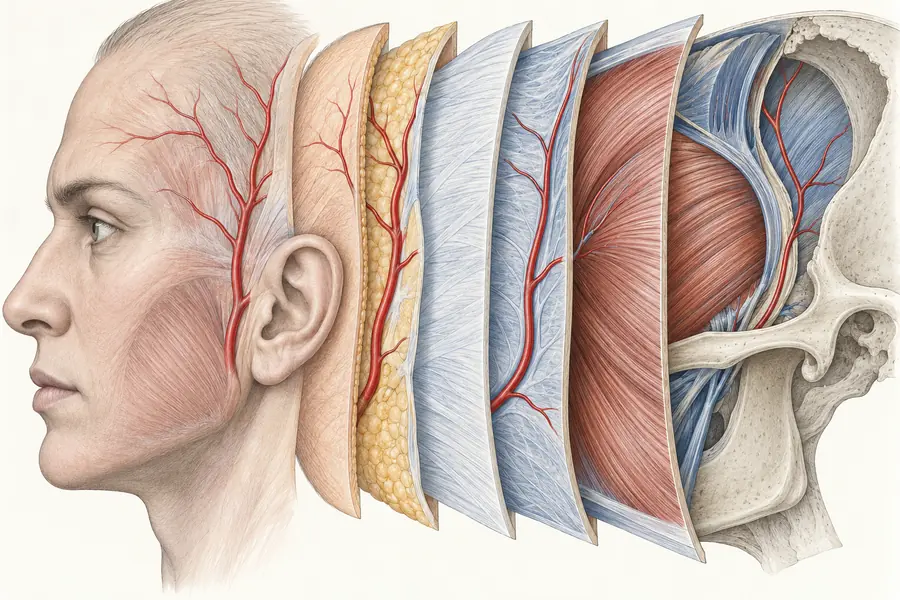
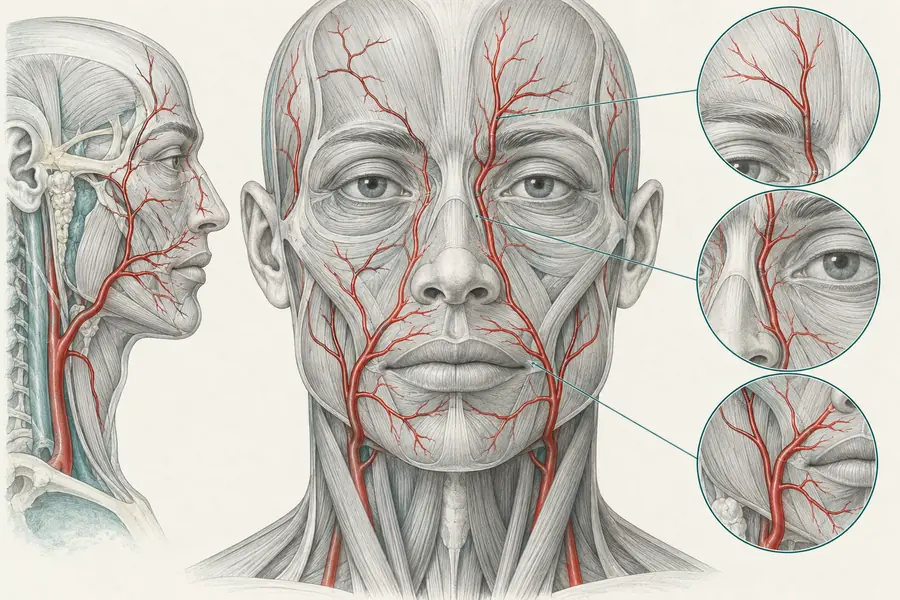
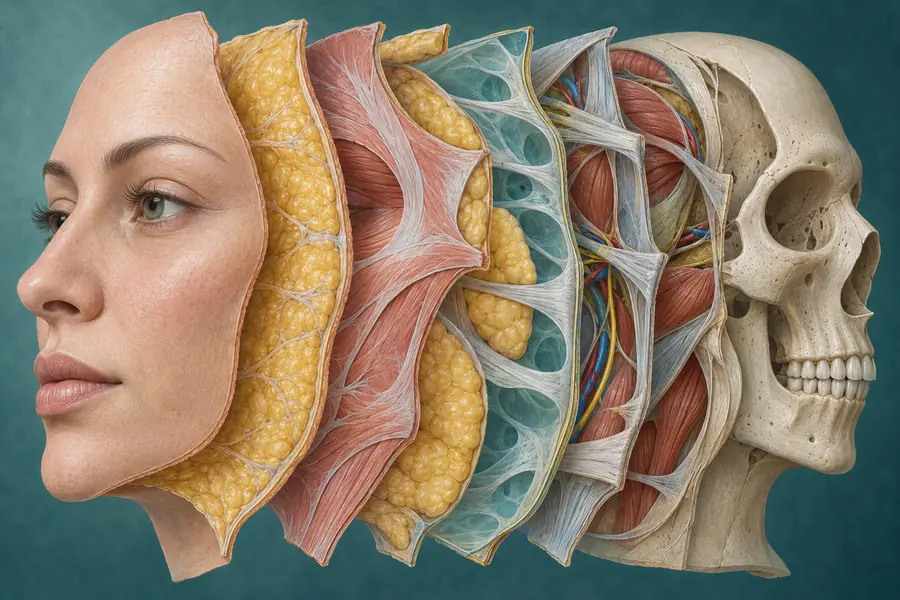
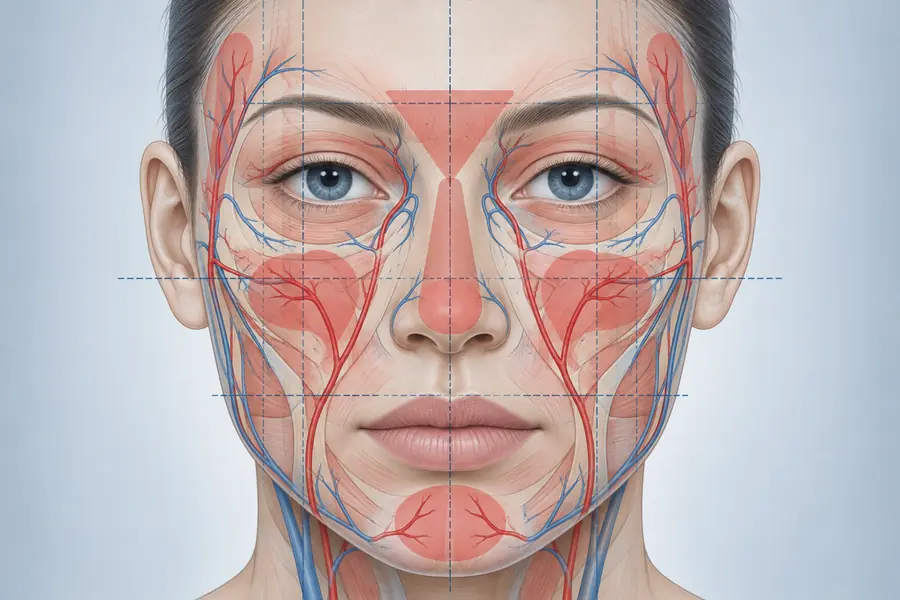
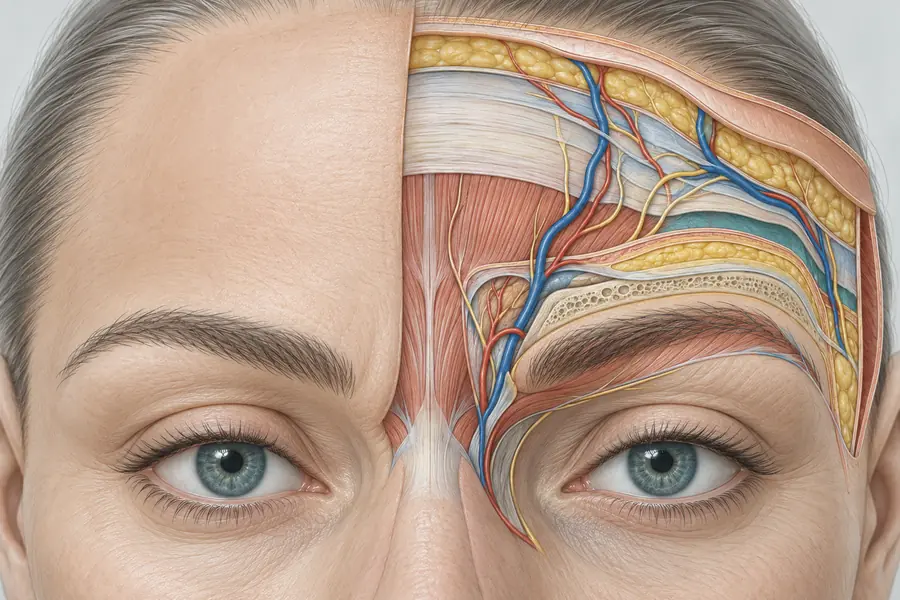
The arterial and venous anatomy of the face, dominated by the facial artery and its anastomoses with the ophthalmic circulation around the orbit.
The face is supplied chiefly by the facial artery, a branch of the external carotid, with a significant contribution around the orbit from the ophthalmic artery, a branch of the internal carotid.
The facial artery crosses the mandible at the anterior border of masseter — a reliable landmark, being one of the few places the pulse is readily palpable — then runs a tortuous course to the nose, giving off the inferior and superior labial arteries and continuing as the angular artery toward the medial canthus. The superficial temporal artery supplies the temple and lateral scalp.
The ophthalmic artery’s terminal branches, supratrochlear and supraorbital, emerge at the superior orbital rim into the glabella and forehead.
Two properties define the practical risk. First, anastomosis: the angular artery connects with the dorsal nasal branch of the ophthalmic at the medial canthus, so the external and internal carotid territories are continuous. Second, variability: cadaveric studies report substantial differences in the course of the facial artery between individuals and between sides of one face, with branches occasionally absent.
The veins are equally relevant and less discussed. The facial vein communicates with the cavernous sinus through the ophthalmic veins, and lacks competent valves.